Since September 2010, this blog has recorded the journey of this music junkie as I attempt to listen to all the music in my CD collection. CDs revisited in their entirety from start to finish - no skipping tracks, no shuffle. Compact Discs only - no vinyl, no tapes, no files.

Showing posts with label 1976. Show all posts

Thursday, June 11, 2026

Bill Conti - Rocky: Original Motion Picture Score (1976)


I spent most of the first 12 years of my life in Odessa, Texas, which is situated on the Eastern edge of the Chihuahuan Desert. So, when sharing stories of my childhood with family, I often start with the phrase, "When I was growing up in the desert..." And here ya go:

When I was growing up in the desert, my friends and I went to the movies quite a bit. In my mind, we went every Saturday, but it was probably closer to twice a month. Our mothers were probably thrilled to have us out of their way and we were thrilled to see some entertainment in an air conditioned building. (At the time, my house as well as my school used swamp coolers instead of air conditioning.)

In addition to the drive-in places (which we never attended for whatever reason), there were four movie theaters in town. Two were downtown: the Ector theater and the Scott theater. Closer to my house were the Grandview Theater and the two screen cinema in the new Winwood Mall out on East 42nd Street.

So if there was a movie we truly enjoyed, we were limited in terms of options:
  1. If the movie was "held over" at the theater, we could pay to see it again.
  2. We could wait a few years for it to appear on television (for Rocky, the first broadcast was on CBS, Sunday, February 4, 1979).
  3. We could possibly find a novelization of the movie.
  4. Buy a copy of the soundtrack album.
That's it. No VCR, no DVD, no PPV, no streaming, no on demand. And Rocky wasn't on HBO until 1986.

Of course, me and my friends absolutely loved Rocky and probably saw it more than once at the theater. My friend Troy also picked up a copy of the soundtrack album and we would listen to it over and over when I was at his house. Until I picked up this CD, I had forgotten how often we listened to the thing because I remember almost all of it.

The album was nominated for a Grammy award in the category of Best Sound Track Album – Background Score from a Motion Picture or Television, losing to Star Wars (the first of John Williams's six consecutive wins in that category, 1978-83). The album was also nominated for an Oscar for best soundtrack plus Gonna Fly Now was nominated for a Grammy in the category of Best Pop Instrumental Performance, both also losing to Star Wars.

Press of the time:
  • RPM: "powerful and exciting"
  • CashBox: "short pieces that stand on their own even if you have not seen the movie"
  • Billboard: "includes a couple of vocal cuts that are right-on contemporary"
  • High Fidelity: "the main part of Bill Conti's score proves quite listenable and varied"

Album chart peaks:
  • US Billboard 200: #4
  • Billboard R&B: #32
  • CashBox: #5

Tracks: 13 tracks, 31½ minutes. Gonna Fly Now, the lead track here, was released as a single, peaking at #1 on Billboard's Hot 100 in July 1977 and #20 on the adult contemporary chart. It remains highly motivational at sports events a half-century later. There's an a capella doo-wop track written by Frank Stallone called Take You Back which may have been my first exposure to doo-wop and I'm amazed at how much of that one that I remember. I also recall Going The Distance and Fanfare For Rocky. Although I didn't know what a fugue was when I was 10 years old, I now recognize the counterpoint that closes the album, simply titled Rocky's Reward. The other tracks are brief cues from the movie that perfectly capture the mood of particular scenes and, like any good soundtrack, recycle a few leitmotifs. I had completely forgotten about You Take My Heart Away which features melodies from Gonna Fly Now and vocals from DeEtta Little & Nelson Pigford.

Gonna Fly Now also hit the Hot 100 in contemporary cover versions by Rhythm Heritage (peaked at #94, March 1977), Current (#94, April 1977), and most famously, Maynard Ferguson (#28, June 1977).

Personal Memory Associated with this CD: see above

Wednesday, June 10, 2026

Roy Ayers Ubiquity (2024)


UK import

2024 box set of five albums by vibraphonist Roy Ayers - sometimes known as the "Godfather of Acid Jazz" - released in the years 1975-1977. I almost didn't buy this set because I already had two of the five albums, but I wanted to hear Vibrations and this set was the cheapest way to pick up a (legitimate) copy. At $30 ($6 per album), it's a hard to pass up this shining set. I mean, everybody loves the sunshine, right?


A TEAR TO A SMILE (1975)
10 tracks, 40 minutes


In which Ayers moves from his early '70s funky jazz to a funk-jazz-soul-R&B-disco mix while maintaining his bona fides as one of the best vibraphone players in the land. There's a new focus on vocal tracks that sometimes works, sometimes doesn't. There's some great grooves and performances to be had throughout. With this album, Ayers begins his slow transition from jazz player to conductor/producer/arranger as he inches toward the smoother, more commercial sound of his late '70s peak.

I love how he adds descriptors for each performer in the credits.

Reviews/ratings:
  • Record World: "The feel flows throughout"
  • CashBox: "a low keyed approach to funk, sprinkled ever so lightly with the essential life juices of jazz and rhythm and blues."
  • The Virgin Encyclopedia of Jazz (1999): ★★

Album chart peaks:
  • US Billboard 200: Did not chart
  • Billboard Jazz: #8
  • CashBox: #181
  • Record World Jazz: #11

Tracks: I enjoy 2000 Black, Show Us A Feeling, The Old One Two (Move To Groove), and A Tear To A Smile. My current favorite cut is the ethereal ballad, Miles (Love's Silent Dawn). The only track that plays it safe is a cover of Earth, Wind & Fire's The Way Of The World, but just because it's safe doesn't mean it's not extrememly enjoyable. (And quite frankly, that song is just begging for jazz covers.) Ayers hits the vibes more on this album than a few of the subsiquent releases, especially on tracks like Ebony Blaze, Time And Space, That's The Way Of The World, Miles (Love's Silent Dawn), and the title track.


MYSTIC VOYAGE (1975)
10 tracks, 43 minutes


Previously appeared on The CD Project. Note: the 7" version of Evolution is included in this box set as a bonus track.


EVERYBODY LOVES THE SUNSHINE (1976)
10 tracks, 40 minutes


Previously appeared on The CD Project.


VIBRATIONS (1976)
11 tracks, 42 minutes


Following up the success of Everybody Loves The Sunshine, so we've got more of the same. I'm not complaining. Rather than trying to reinvent himself, Ayers doubled down on the formula he had been refining all decade: warm vocals, sophisticated jazz harmonies, and irresistible funk grooves. This album also marks the beginning of a shift to utlizing disco/dance grooves on a few tracks. While not having the commercial success of Everybody Loves The Sunshine, Vibrations did quite well on a variety of charts.

Reviews/ratings:
  • DownBeat (★½): "I've been known to walk out of restaurants for no other reason that stuff like this coming over the loudspeaker."
  • Billboard: "elements of jazz and soul that fuse together for a varied array of mellow and upbeat compositions."
  • CashBox: "Roy Ayers Ubiquity is a classy jazz/rock/funk aggregation that, on each album, gets better and better."
  • The Virgin Encyclopedia of Jazz (1999): ★★


Album chart peaks:
  • US Billboard 200: #74
  • Billboard R&B: #11
  • Billboard Jazz: #8
  • CashBox: #94
  • CashBox Jazz: #4
  • Record World Jazz: #4

Tracks that could have fit on Everybody Loves The Sunshine: Baby I Need Your Love, The Memory, Better Days, Searching, Vibrations, and Baby You Give Me A Feeling.

Tracks embracing the disco trends of the time: Domelo (Give It To Me), Come Out And Play, and Moving Grooving.

Too funky to fit neatly in either of the above categories: Higher and One Sweet Love To Remember.

Bonus track: 7" version of Domelo (Give It To Me)


LIFELINE (1977)
10 tracks, 43 minutes


I bought this box set because I dig the albums Mystic Voyage and Everybody Loves The Sunshine and wanted more of the same. That's just what we're treated to here. (I also recommend the 2003 compilation, Virgin Ubiquity: Unreleased Recordings 1976-1981, which I recently discovered at my local library). To say I am pleased with this box set is an understatement.

Reviews/ratings:
  • Billboard: "There are some subtly cooking gems on this set"
  • CashBox: "shines with fresh vitality and as much variety as you'll hear pressed in vinyl"
  • Record World: "Ayers has disco-fied his sound as never before and the results should reach a much wider audience."
  • The Virgin Encyclopedia of Jazz (1999): ★★
  • The Rolling Stone Jazz Record Guide (1985): ★

Album chart peaks:
  • US Billboard 200: #72
  • Billboard R&B: #9
  • Billboard Jazz: #8
  • CashBox: #74
  • CashBox Jazz: #3
  • Record World Jazz: #1

Tracks: my favorites are This Side Of Sunshine, Gotta Find A Lover, Lifeline, and Sanctified Feeling.

Bonus track: 12" version of Running Away, which peaked at #19 on Billboard's R&B chart and #14 on Billboard's dance chart


Previously revisited for the blog:
Everybody Loves The Sunshine (1976)
Mystic Voyage (1975)


Thursday, April 23, 2026

Donald Byrd - Caricatures (1976)


Note: the CD I listened to was the 2003 Rare Groove Series Edition.

MIZELL BROTHERS MONTH (APRIL 2026)

More smooth funk-jazz music from Byrd and the Mizells. But by 1976, disco was in full swing and that style of dance music definitely had an impact on this recording. Is it still jazz? Depends who you ask and how seriously they take themselves. But for a guy like me who simply can't stand still as the CD spins, Caricatures is hard to dismiss as it fully commits to the bit. The grooves feel so good and danceable you forget to miss the lack of traditional improv. It may not be jazz in the pure sense, but it is, undeniably, a good time. I guess that was the point and one I can fully support.

The album didn't carry any liner notes, sadly. Caricatures was Byrd's final album for the Blue Note label before moving to Elektra. It was also Byrd's fifth and final release produced by the Mizell Brothers. And if you are of a certain age and inclination, the cover artist is immediately identifiable as Al Hirschfeld.

Reviews/ratings:
  • Record World: "disco arrangements expertly performed"
  • High Fidelity: "Byrd's trumpet playing has indeed become a caricature of the crisp inventiveness of his earlier years."
  • The Virgin Encyclopedia of Jazz (1999): ★★★


Album chart peaks:
  • US Billboard 200: #60
  • Billboard Jazz: #7
  • Billboard R&B: #12
  • CashBox: #133
  • CashBox Jazz: #6
  • Record World Jazz: #5

Tracks: Granted, Blue Note didn't know anything about 12" dance remixes nor marketing to the disco crowd, but some of these tracks should have charted on Billboard's dance charts. Ah, well. My top picks are the title track, Return Of the King, and Onward 'Til Morning. Plus I'd love an instrumental version of Dance Band, because with that title, those grooves, and a tasty solo from Ernie Watts, the track is more of a command than a suggestion. There's nothing to skip, but the disc has a lull in the middle with Science Funktion and a cover of Dancing In the Street. 

Personal Memory Associated with this CD: None.

Previously revisited for the blog:
Love Byrd (1981)
Stepping Into Tomorrow (1975)
Street Lady (1974)
Black Byrd (1973)
A New Perspective (1964)


Sunday, April 12, 2026

L.T.D. - Love to The World (1976)


MIZELL BROTHERS MONTH (APRIL 2026)

The Mizell-produced releases I usually enjoy are mostly jazzy instrumentals, but this album is soulful R&B leaning towards disco. Instrumentals are replaced by vocals, but when the vocals come from Jeffrey Osborne and his brother Billy, I can't complain. However, I can (and will) complain about the brevity of the album - 7 tracks, 33½ minutes. And the forgettable final track shouldn't even count in those numbers. Nevertheless, the stuff I like I really like, and that's a majority of the tracks. The Mizell touch is less pronounced on this album, but it's still there.

Press of the time:
  • CashBox: "a fine representation of this jazz-funk group"
  • Billboard: "Good example of ability to combine contemporary funk and general musical sophistication"
Album chart peaks:
  • US Billboard 200: #52
  • Billboard R&B: #7
  • CashBox: #81

Tracks:
  1. Love To The World (#91 pop, #27 R&B) - not much to the verse, but the simple chorus with soaring strings is glorious. And I certainly can't argue with the sentiment.
  2. Time For Pleasure - featuring some tasty horn licks, this is the funkiest track on the album. Just the opposite of the previous tune, the syncopated verse is much better than the smoother chorus.
  3. Love Ballad (#20 pop, #1 R&B) - The band's second biggest single and the best track on the album. The tune has often been covered (by Gary Bartz on another Mizell Brothers album, for example), but nobody completely owns it like Jeffrey Osborne.
  4. Get Your It Together - I guess "it" is cleaner (safer?) than "shit" but they ain't foolin' nobody. This one reminds me of Crackin' in a good way.
  5. Let The Music Keep Playing - another ballad, this one less successful. Obvious filler, they didn't even bother coming up with a complete set of lyrics.
  6. The Word - straight-up disco so of course I dig it.
  7. Love To The World Prayer - a slower rehash of the lead track with children's choir. I'm out.
If I owned this one on vinyl, side 1 would be getting the majority of playing time.

Personal Memory Associated with this CD: None

Sunday, April 5, 2026

Roger Glenn - Reachin' (1976)


EU import

MIZELL BROTHERS MONTH (APRIL 2026)

From the back CD insert: "Sought-after jazz funk rarity from reed-master Roger Glenn. Produced by the Mizell brothers and featuring Bill Summers and Paul Jackson from the Headhunters." I recognized Glenn's name from his work with Mongo Santamaria and Donald Byrd, but I had no idea he ever released an album as a leader until I started my Mizell Brothers deep-dive. Disco was all the rage in 1976 but this thing is a jazz-fusion/Latin-funk gem.

Glenn is a multi-instrumentalist specializing in woodwind and percussion instruments; on this album he focuses on flute and vibraphone. The music has a Latin flair, especially when compared to other Mizell Brothers albums. Great grooves are present, the bass lines are pumpin', and the Hohner Clavinet is making the funk funkier. There's an overall relaxing feeling like you're sitting on the porch, cool breeze blowing, cold drink in hand, and the sun is permanently setting. I'm not normally a fan of jazz flute, but I'll make an exception for Glenn and Bobbi Humphrey.

This 2010 CD reissue includes liner notes from Dean Rudland.

Press of the time:
  • DownBeat (★★★½): "This pleasing, danceable product is hopefully only a first step."
  • Walrus: "hot R&B fusion music which features near relentless rhythm"


Peak on the US Billboard Top 200 chart: Did not chart

Tracks: The album didn’t have a clear hit single for commercial radio, but my top picks today are the appropriately titled Rio, and Kick (co-written by Sheila E.), and the title track. The final track, Rezo Chango, just doesn't fit in with the rest of the album and, not coincidently, is the least Mizell-sounding track here.

Personal Memory Associated with this CD: None

Monday, February 23, 2026

Ned Doheny - Hard Candy (1976)


Japanese import

A largely unknown album with a considerable reputation. Various online blurbs I found:
  • "widely considered the finest blue-eyed soul album of all time"
  • "one of L.A.'s phantom treasures, a rarely heard gem"
  • "blue eyed soul opus"
  • "the epitome of breezy AOR"
  • "One of the best, if not greatest blue eyed soul records ever made"
  • "nice little cool pop-rock LP full of good vibes"
And Rolling Stone magazine described it as "soft-core funk for soulful white boys." C'est moi!
More about Doheny from his old website: neddoheny.com

The album is certainly an easy listen that all goes down smooth. My problem is that none of the hooks are hooking me. Nevertheless, if you have a adult-oriented rock (AOR)/West Coast playlist (and who doesn't?), this album is a pleasant addition.

Press of the time:
  • Rolling Stone: "undeniably accomplished and enjoyable"
  • CashBox: "Doheny, as evidenced by this fine LP, is an excellent songwriter/singer."

Peak on the US Billboard Top 200 chart: Did not chart

Tracks: I was previously familiar with the lead track, Get It Up For Love, from it's inclusion on the first volume of the Too Slow To Disco series. I was surprised to discover that particular track was never released as a single. The released singles from this album were A Love Of Your Own (track 5) and If You Should Fall (track 2). Neither saw any chart action. Could be because there wasn't any disco flavor to the tunes and/or this type of music was just coming into its own, with Boz Scaggs taking the lion's share of the public's dollar via his Silk Degrees album. A Love Of Your Own is a nice ballad and should probably have charted somewhere, but I think the better tracks on the album are Each Time You Pray and On The Swingshift; the latter features a tasty solo from Tom Scott.

Personal Memory Associated with this CD: My friend Richard and I were both terrible at golf (I've since given up the game), but when we'd play, we'd often skull the ball sending it skittering along the ground. After that happened, he'd always say "get it up for love" meaning that he needed to get the ball airborne on the next shot. I loved the double entendre. So I think of our many golf outings when I hear that song. Richard was probably familiar with the song from the Average White Band cover so my golfing memory really has nothing to do with this album so here's a scan of the CD obi followed by a weak English translation:
The charm of Boz Scaggs and Jackson Browne all to yourself. Warmly wrapped in naive kindness and stylish sounds. The bright album cover is also an excellent masterpiece.

Born in Los Angeles in 1948. Debuted in 1973 with Jackson Browne as the first artist signed to Asylum Records. This work is the first album transferred to Columbia, USA, and is a masterpiece of AOR. Produced by guitarist Steve Cropper, who has participated in numerous recordings for Stax, the prestigious soul label, the album skillfully incorporates Doheny's taste for soul into a stylish and sophisticated piece. Backing vocals include Don Henley, Glenn Frey, Linda Ronstadt, and J.D. Souther, and a young David Foster's name is also credited. Many cover versions of the famous song 'Get It Up For Love' have been created.

Monday, June 30, 2025

Various Artists - Soul Hits of the '70s: Didn't It Blow Your Mind, Vol. 18 (1995)


Volume 18 of a 20 volume Rhino series. I had no plans to collect all 20 CDs, but they keep appearing in used bins and I simply can't help myself so we'll have to wait and see where this leads. From what I can ascertain, the later volumes released in 1995 are getting harder to find which normally translates to higher price tags, so I'm lucky I happened across this one because I think it is one of the strongest in the series. Singles included on this volume charted 1975 - 1977, the years in which I developed a serious commitment to radio and music.

Tracks, with Billboard chart peaks:
  1. Give It What You Got - B.T. Express (1975, #40 pop, #5 R&B)
    If it ain't broke, don't fix it. The group's 1974 single Do It ('Til You're Satisfied)" topped the R&B chart in 1974 so this is more of the same as far as groove, style, and lyrical content are concerned. Not quite as successful on the pop chart this time around, though.
  2. Wake Up Everybody (Part 1) - Harold Melvin & The Blue Notes (1975, #12 pop, #1 R&B, #34 AC) 
    Typical Philly Soul greatness from Teddy Pendergrass and company. Sadly, the lyrics continue to be relevant half a century after they were written.
  3. Sweet Thing - Rufus feat. Chaka Khan (1975, #5 pop, #1 R&B)
    I listen to something this good and can't help from hollering, “@#$%&, Chaka! Sing that $#%!”
  4. I'll Be Good To You - The Brothers Johnson (1976, #3 pop, #1 R&B)
    George & Louis Johnson teaming up with producer Quincy Jones made for several excellent collaborations. This was the first.
  5. Kiss And Say Goodbye - The Manhattans (1976, #1 pop, #1 R&B, #12 AC)
    Recorded in Philadelphia with MFSB as the backing band, this is a fantastic slow jam. I love this song from the spoken intro to the smooth ever-so-slightly-out-of-tune doo-wop harmonies. A simple break up song, but oh so well done. Pleading, soulful vocals over an insistent, pulsing string hook. After a Barry White-ish spoken word bass voice intro, we're treated to a beautifully subtle, falsetto voice that grows in intensity for the next 3 minutes.
  6. You'll Never Find Another Love Like Mine - Lou Rawls (1976, #2 pop, #1 R&B, #4 disco, #1 AC)
    Lou Rawls and Gamble & Huff? Gimme! What a voice and what a soulful pair of writer/producers.
  7. Who'd She Coo? - Ohio Players (1976, #18 pop, #1 R&B)
    A play on the suggestive euphemism "hoochie coo," but when you've got a funk groove this good, lyrics are practically superfluous.
  8. You Are My Starship - Norman Connors (1976, #27 pop, #4 R&B)
    Drummer/producer Connors sure could put together a solid group of musicians for his jazz/R&B albums. This one features vocals by Michael Henderson and a soprano sax solo by Gary Bartz. It was the biggest solo hit from Connors but is one of my least favorites cut from him. Go figure.
  9. Dazz - Brick (1976, #3 pop, #1 R&B, #7 disco)
    Dazz is supposedly a combination of disco and jazz. I'm not sure that's what it is, but we're treated to mean flute solo.
  10. Tryin' To Love Two - William Bell (1976, #10 pop, #1 R&B, #25 AC)
    This didn't get much airplay in west Texas so I don't recall hearing it as a child. That's my loss because this thing is fantastically smooth. I finally heard it about 15 years ago - better late than never.
  11. I Wanna Get Next To You - Rose Royce (1976, #10 pop, #3 R&B, #9 AC)
    We're treated to another fantastic slow jam, this time from the mind of Norman Whitfield. I once included this one and Kiss And Say Goodbye (track 5) in a playlist I titled "The Greatest Slow Jam Mix Ever:
  12. Best Of My Love - The Emotions (1977, #1 pop, #1 R&B, #11 disco)
    Written and produced by musical genius Maurice White. The bass line is awesome in its simplicity. Great groove throughout. The single deservedly won the Grammy award for Best R&B Performance By A Duo Or Group With Vocals.

Personal Memory Associated with this CD: Hearing most of these songs while riding around Odessa, Texas through the AM radio in my mother's yellow station wagon (a Ford Country Sedan, maybe?). Particular favorites at the time were Kiss And Say Goodbye, You'll Never Find Another Love Like Mine, and Best Of My Love. Other personal faves of 1976 can be found here: Counting down the Top 76 of '76

Previously revisited for the blog:
Volume 5Volume 13
Volume 6Volume 14
Volume 12Volume 15

Thursday, April 24, 2025

Earl Klugh - Earl Klugh (1976)/Living Inside Your Love (1976)/Magic In Your Eyes (1978)


UK Import

You didn't ask, but at some point during my usual morning routine I'll sit down at the computer with a cup of black coffee or espresso lungo and play a few games (Wordle, Byrdle, Bandle, sudoku, daily challenges, etc) to get the ol' brain up and running again. The music soundtrack for these action-packed mornings is usually quite sedate - Rock You Like A Hurricane need not apply. I've got a playlist I've simply titled "Mornin'" and yes it includes the Al Jarreau song with which it shares a title. Oftentimes, however, I'll simply pull up Earl Klugh tunes, click the shuffle button, and have the fates determine which of the 160+ tracks I'll hear. It's all good stuff, perfect for my mornings. So when I saw yet another great Klugh threefer from BGO, I didn't hesitate. And with that purchase (my third such Klugh set), I completed my Klugh discography 1976-1995 while providing more songs for the morning shuffle.

Klugh was classically trained and has had a successful career using playing this music using that technique. I like it all and have liked the smooth sound since I first heard Klugh in the mid-'80s. The usual beef comes from people who feel the need the categorize: the music is too easy listening to be jazz and too jazzy to be easy listening. I couldn't care less.

It should go without saying that the remastering here by BGO sounds fantastic, but I'm going to mention it anyway because it does.


EARL KLUGH (1976)
8 tracks, 39 minutes


Recorded when Klugh was 22 years old but already a veteran in the field, most notably as part of George Benson's band. This album was originally released on the Blue Note label and produced by Dave Grusin and Larry Rosen. Guests include Lee Ritenour, Harvey Mason, and Pete Christlieb. Grusin's arrangements often overpower the acoustic guitar, but that's a minor complaint.

Reviews/ratings:
  • Record World: "An across the board winner."
  • CashBox: "His deft handling of the classical guitar lends a rich elegance to pop hits"
  • Downbeat (★★★½): "Melodic interpretation would seem to be Klugh's strong point."
  • The Virgin Encyclopedia of Jazz (1999): ★★★


Album chart peaks:
  • US Billboard 200: #124
  • Billboard Jazz: #16
  • CashBox: #189
  • CashBox Jazz: #19
  • Record World Jazz: #22

Tracks: 8 tracks, including 3 Klugh originals. The best cut is a beautiful take on the Bill Evans standard, Waltz For Debby. Other highlights are the covers of Could It Be I'm Falling In Love and Laughter In The Rain plus the Klugh original Angelina.


LIVING INSIDE YOUR LOVE (1976)
7 tracks, 37 minutes


Sounds much like its predecessor because this album Blue Note release was again produced by Dave Grusin and Larry Rosen. Guests include Ralph MacDonald, Eddie Daniels, and Steve Gadd. Maybe some "sophomore slump" but the drop in quality is negligible.

Reviews/ratings:
  • Stereo Review: "The selections here are generally ho-hum stuff, and they're played accordingly."
  • Record World: "the finesse of his playing is his most convincing selling point."
  • The Virgin Encyclopedia of Jazz (1999): ★★★


Album chart peaks:
  • US Billboard 200: #188
  • Billboard Jazz: #8
  • Billboard R&B: #58
  • CashBox: #182
  • CashBox Jazz: #12
  • Record World Jazz: #13

Tracks: The best tracks are the originals Felicia, the title track, and the subtle take on Bacharach's The April Fools. The cover of I Heard It Through The Grapevine falls flat.


MAGIC IN YOUR EYES (1978)
9 tracks, 33 minutes


Note: this release was originally purchased as a LP, later replaced by this CD set.

This album is slightly different than the other two because of production by the legendary Booker T. Jones, who did the producing and some string arrangements, but no playing. I would have asked for at least one organ solo, but I guess that wasn't a priority for either Earl or Booker. Jones's production brings Klugh to the front and lessens the emphasis on strings. This would become what I consider to be Klugh's signature sound. Guests include Greg Phillinganes, Paulinho da Costa, and one of Klugh's major influences, Chet Atkins. And, if I'm not mistaken, this album introduced Gene Dunlap as Klugh's regular drummer. There's steel guitar on three tracks, but it never sounds like it belongs.

Reviews/ratings:
  • CashBox: "Klugh continues to impress"
  • Billboard: "mellow, lyrical instrumental in a pop/jazz vein."
  • The Virgin Encyclopedia of Jazz (1999): ★★★


Album chart peaks:
  • US Billboard 200: #139
  • Billboard Jazz: #4
  • CashBox: #137
  • CashBox Jazz: #6
  • Record World Jazz: #8

Tracks: 9 tracks including 6 Klugh originals. The best track is the title track, followed by Julie, Rose Hips, Cry A Little While, and the cover of Guaraldi's standard, Cast Your Fate To The Wind. Good Time Charlie's Got The Blues is a - errrrr - interesting choice for a cover track, but contributions by Atkins saves the thing.

Previously revisited for the blog:
Move (1994) Collaboration (1987)
Cool (1992) Soda Fountain Shuffle (1985)
Midnight in San Juan (1991) Nightsongs (1984)
Volume One (1991) Two of a Kind (1982)
The Best of Earl Klugh (1991) Late Night Guitar (1980)
Whispers & Promises (1989) How To Beat The High Cost Of Living (1980)
Solo Guitar (1989)
Dream Come True (1980)/Crazy For You (1981)/Low Ride (1983)
Finger Paintings (1977)/Heart String (1979)/Wishful Thinking (1984)

Tuesday, December 3, 2024

Grover Washington, Jr. - A Secret Place (1976)/All The King's Horses (1972)


The saxophonist's sixth and second albums, originally issued on the Kudu label, combined in 1986 by Motown Records for this two-for-one reissue. Both albums were recorded at the legendary Van Gelder Studios and produced by Creed Taylor, best known for his work on his own CTI record label. Washington appears on soprano, alto, and tenor saxophones, often overdubbing duets with himself.

This is where I would normally complain about the fact that Motown didn't pair consecutive album releases or, at the very least, sequence them chronologically. However, these two work well together and in this order. Go figure.


A SECRET PLACE (1976)
4 tracks, 34 minutes

According to the advertisement below, before the terms "contemporary jazz" and "smooth jazz" were coined, the genre was known as "crossover jazz." No matter the nomenclature, I dig the stuff and this album shows that crossover jazz can lean more to the jazz side of things. These four tracks, each clocking in at over 8 minutes, have laid back R&B grooves to be sure, but there's a good deal of room on each track for the soloists to stretch out. There's plenty of familiar names in the playing credits, including Dave Grusin, Eric Gale, and Ralph MacDonald. 

Reviews/ratings:
  • CashBox: "a surprisingly laid back effort"
  • Downbeat (★★): "flirts with boredom the way some recordings flirt with inspiration"
  • The Rolling Stone Jazz & Blues Album Guide (1999): ★★
  • The Virgin Encyclopedia of Jazz (1999): ★★★


Album chart peaks:
  • US Billboard 200: #31
  • Billboard R&B: #7
  • Billboard Jazz: #1
  • CashBox: #48
  • CashBox Jazz: #1
  • Radio & Records Jazz Radio National Airplay: #1

Tracks: Two originals by Washington, a popish tune from drummer Harvey Mason, and a fantastic cover of Herbie Hancock's Dolphin Dance. My only complaint is the 34 minute running time is far too short.


ALL THE KING'S HORSES (1972)
8 tracks, 38 minutes

While still smooth, this album of pop tunes and updated standards has tracks averaging about 4 minutes each and the arrangements vary from combo to big band to full orchestra. Guests on these cuts include Bob James, Richard Tee, Billy Cobham, Bernard Purdie, and Ron Carter.

Reviews/ratings:
  • CashBox: "a perfect compromise between jazz and pop"
  • Record World: "Music that you can get heavily into, or just turn on in the background."
  • Billboard: "will be one of the biggest albums of the year"
  • The Rolling Stone Jazz & Blues Album Guide (1999): ★★
  • The Virgin Encyclopedia of Jazz (1999): ★★

Album chart peaks:
  • US Billboard 200: #111
  • Billboard R&B: #20
  • Billboard Jazz: #1
  • CashBox: #99
  • Record World Jazz: #1

Tracks: At this point, Washington wasn't yet recording his own material. but he picked some good tunes to cover, including one of the great pop songs of the 1970's, Where Is The Love:
  1. No Tears, In The End (Ralph MacDonald, William Salter): a tune later appearing on the 1973 Roberta Flack album Killing Me Softly.
  2. All The King's Horses (Aretha Franklin): a hit for Aretha Franklin in 1972 (#26 pop, #7 R&B).
  3. Where Is The Love (MacDonald, Salter): a hit for Roberta Flack & Donny Hathaway in 1972 (#5 pop, #1 R&B, #1 AC).
  4. Body And Soul (Edward Heyman, Robert Sour, Frank Eyton, John Green): a jazz standard from 1930.
  5. Lean On Me (Bill Withers): a hit for Withers in 1972 (#1 pop, #1 R&B, #4 AC)
  6. Lover Man (Jimmy Davis, Jimmy Sherman, Roger Ramirez)/Interlude #2 (Bob James): a jazz standard from 1941 plus a extended original soloing section in the middle
  7. Love Song 1700 (Henry Purcell): adapted and arranged by Bob James.
The only skippable track is Love Song 1700, which doesn't quite work despite good intentions. [insert your own baroque/broke pun here]

Personal Memory Associated with this CD: In late 2000 or early 2001 someone I know well* was downloading some tunes from a popular file sharing site that rhymes with "mapster" and Washington's version of Where Is The Love was one of the first tunes allegedly downloaded.

*someone of my general age, height, weight, and eye color.
This statement has been approved by this blog's amateur legal team, a group with over 25 years of legal experience (i.e., watching episodes of Law & Order).

Previously revisited for the blog:
Prime Cuts 1987-1999 (1999)The Best Is Yet To Come (1982)
Soulful Strut (1996)Come Morning (1981)
All My Tomorrows (1994)Winelight (1980)
Time Out of Mind (1989)Skylarkin' (1980)
Anthology (1985)Mister Magic (1975)
Inside Moves (1984)/Paradise (1979)

Friday, June 21, 2024

Jeff Beck - Wired (1976)


Note: the CD I listened to was the 2001 reissue.

Like its predecessor, Blow By Blow, this album treats the listener to stellar rock instrumentals led by a legendary guitarist and produced by the legendary George Martin. And while the critics (see below) wanted to compare the two albums, but they're peas in a pod as far as I'm concerned so comparison is useless. Some writers put the "jazz fusion" tag on the album and it charted on some jazz charts, but it's still rock'n'roll to me. In addition to Beck's fretwork, I'm digging Max Middleton's stuff on the Fender Rhodes and Clavinette. 

Press of the time:
  • Billboard: "another solid instrumental set"
  • Stereo Review: "a guitarist of taste, thought, and delicacy."
  • CashBox: "Hammer's synthesizer riffs make the perfect foil for Beck's guitar and master producer George Martin makes the whole package quite tasty."
  • Record World: "Beck's guitar work flowing along as always but making its statements in a more forceful manner."
  • Rolling Stone: "Beck's best yet"
  • Robert Christgau (B-): "continuation of Blow by Blow's mindless trickery"


Album chart peaks:
  • US Billboard 200: #16
  • CashBox: #12
  • CashBox Jazz: #31
  • Record World Jazz: #38

Tracks: The lead cut, Led Boots, has grown on me over time but is still my least favorite track on the album. Track 2, a funk-rock tune titled Come Dancing, was released as a single, but failed to chart and that's a shame. Of the remaining tunes, we get a sublime Mingus cover (Goodbye Pork Pie Hat) and three tunes written by drummer/songwriter/producer Narada Michael Walden. It's all good - not a skippable track in the bunch - and if you want to go ahead and spin Blow by Blow at the same listening session, by all means please do.

Personal Memory Associated with this CD: Although this album is perfect for summertime listening, I've no memories associated with this particular album. However, there's more about my 1976 memories in this post over at our sister blog, My Favorite Decade

Previously revisited for the blog:
Jeff Beck With The Jan Hammer Group Live (1977)
Blow By Blow (1975)


Wednesday, October 4, 2023

Various Artists - Billboard Top Dance Hits 1976 (1992)


Truth in advertising from the good folks over at Rhino: ten tunes from 1976, all but one hit #1 on the Billboard Dance chart. Pro: great tunes and lots of them. Con: with a total playing time of only 37 minutes, we got some edits here that would make K-Tel blush. We got plenty of room on this disc for some extended dance/album versions.

One in a series of ten covering the years 1976-1985, not to be confused with The Disco Years series, also issued by Rhino.

Peak on the US Billboard Top 200 chart: Did not chart

Tracks, with chart peaks and links to previous appearances on this blog:

SongArtistTimeDanceHot 100R&BPrev.
Don't Leave Me This WayThelma Houston3:431111, 2, 3, 4
Spring AffairDonna Summer3:38147241
Midnight Love AffairCarol Douglas4:211102

Down To Love TownThe Originals2:56147931
You Should Be DancingBee Gees4:161141, 2
Try Me, I Know We Can Make ItDonna Summer4:16180351
More, More, More (Pt. 1)Andrea True Connection3:0114231, 2, 3
Love HangoverDiana Ross3:481111, 2, 3
I'm Gonna Let My Heart Do The WalkingThe Supremes3:1034025
Mighty HighMighty Clouds Of Joy3:3516922


Why does Donna Summer get 2 tracks? Because she's the undisputed Queen of Disco, that's why. The overall #1 year-end dance song for 1976, according to Billboard, was That's Where The Happy People Go by The Trammps, released in December 1975. However, the incomparable Don't Leave Me This Way was Billboard magazine's #1 dance tune for 1977, released in November 1976. Like Billboard, I also once declared Don't Leave Me This Way as my favorite song of 1977 and I stand by that today. And then there's Love Hangover which has one of the best transitions in disco music. And then there's that funky keyboard riff from More, More, More. And then there's... I could go on and on - heck, I recently declared disco music to be "the most joyous music ever produced." I love this stuff.

Personal Memory Associated with this CD: I had no designs on trying to complete the 10 disc set, but they just keep popping up in used bins so we'll see what happens. Please, no wagering.

Previously revisited for the blog:
Billboard Top Dance Hits 1979 (1992)
Billboard Top Dance Hits 1980 (1992)

Wednesday, March 1, 2023

Various Artists - Billboard Top Hits 1976 (1991)


I'll own up to buying this Rhino disc solely for the Theme From S.W.A.T.. The 45 of that discofied TV theme was the first single I ever purchased with my allowance money back in early '76, so that made this used CD deal $3 well spent.


Except for S.W.A.T. and Don't Go Breaking My Heart, I have these tunes on other CDs, most notably Rhino's Super Hits of the '70s: Have a Nice Day, Vol. 18 as well as that label's The Disco Box. I guess once you license a tune, you want to use it as much as possible? Can't really blame 'em.

Curiously, the track listing on the front cover doesn't match the actual track listing.

Peak on the US Billboard Top 200 chart: Did not chart

Tracks:
  1. Don't Go Breaking My Heart - Elton John & Kiki Dee (#1 pop, #1 AC, #3 disco)
    I can't believe I didn't have this great tune on CD before the purchase of this disc. After all, I once named this duet as the best tune of the year. It's a helluva an album opener as I am already up and dancing. Credit where credit is due: it's the arrangement by James Newton Howard that makes this thing a winner.
  2. Dream Weaver - Gary Wright (#2 pop, #14 AC)
    While I prefer Our Love Is Alive, this perfectly titled single is certainly dreamy with its combination of electric piano and synths supported by that upward moving bass line. Also on Super Hits of the '70s: Have a Nice Day, Vol. 18. When my boys were young, we often went to the home games of the Houston Astros. At that time, they had a between innings ad they would run selling their hot dogs. They used this tune but changed the lyrics from "dream weaver" to "steamed wieners." So bad it was comical.
  3. Love Machine (Pt. 1) - The Miracles (#1 pop, #5 R&B, #20 disco)
    And I'm up and dancing again to this perfect melding of disco and R&B, courtesy of some amazing falsetto vocals and Freddie Perren's production prowess. Hooks galore. Previously on the blog: 1, 2, & 3
  4. Let Your Love Flow - The Bellamy Brothers (#1 pop, #2 AC)
    This country rock sure goes down easy. I still hear it often and have yet to meet anyone my age who doesn't have some childhood memory attached to it. And they're still touring! I just had some friends see them last week in El Campo and they'll be near my place in two weeks. More power to 'em. Also on Super Hits of the '70s: Have a Nice Day, Vol. 18
  5. Play That Funky Music - Wild Cherry (#1 pop, #1 R&B, #12 disco)
    I sure did play this funky music back in '76. Previously on the blog: 1, 2, 3, & 4
  6. Saturday Night - Bay City Rollers (#1 pop)
    '50s style pop but tweaked for a teen idol bubblegum boy band. I loved it back in '76, but I'm no longer much of a fan of this infectious earworm. The band burned bright with six Top 40 hits '76 - '77, but by the time my family moved to Bay City, Texas in 1978, it was taboo to even acknowledge the group's existence much less speak their name. And yes, I'm aware that the Scottish band took its name from the "other" Bay City, the one in Michigan. To its credit, Bay City MI actually is much closer to Saginaw Bay than Bay City TX is to Matagorda Bay, but I digress. Also on Super Hits of the '70s: Have a Nice Day, Vol. 15
  7. Fooled Around And Fell In Love - Elvin Bishop (#3 pop)
    I always liked this bluesy ballad. Bishop isn't the singer, that's Mickey Thomas of Jefferson Starship. But it's not like Bishop takes a back seat to anyone: as an original member of the Paul Butterfield Blues Band, he was inducted into the Rock and Roll Hall of Fame (2015). Also on Super Hits of the '70s: Have a Nice Day, Vol. 18
  8. I'd Really Love To See You Tonight - England Dan & John Ford Coley (#2 pop, #1 AC)
    This was the biggest of the duo's six Top 40 hits; I like all six. A song about a booty call decades before that term entered the lexicon. Good soft country rock from good Texas boys. Previously on the blog: 1 & 2
  9. All By Myself - Eric Carmen (#2 pop, #6 AC)
    Liberally borrowing from Rachmaninoff and his own previous work, Carmen put together a hit ballad. Lots of strings, muted guitar, and piano. Sure, it's plagiarized, but it's catchy as all get out. Also on The Absolute Best Soft Rock of the 1970's
  10. Theme From S.W.A.T. - Rhythm Heritage (#1 pop, #6 AC, #11 R&B)
    I remember exactly what drew me to this tune back in '76: it's that funky bass line on the breakdown section underneath the sirens and squealing tires. Then there's that opening with the hi-hat and wah wah/Boomerang pedal guitar lick. Never seen one episode of the series, oddly enough. I was more into half-hour sitcoms and variety shows in '76, I suppose. Even more odd, though, is the fact that the single version (above) clocks in at 4:07 while the album version is 3:21 and, on some promo copies, there's a 2:47 "short version" and that's the version on this CD.

All 10 tracks were top 5 hits and all placed on the Billboard year-end list:


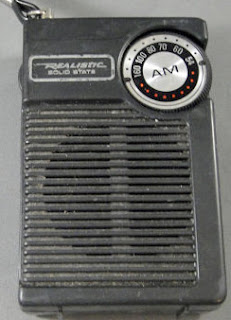
Personal Memory Associated with this CD: All tunes guaranteed heard on my Radio Shack transistor radio:


Click here for more memories of 1976, paricularly Bicentennial celebrations.

Previously revisited for the blog:
Billboard Top Hits 1980 - 1984 (1992)