Since September 2010, this blog has recorded the journey of this music junkie as I attempt to listen to all the music in my CD collection. CDs revisited in their entirety from start to finish - no skipping tracks, no shuffle. Compact Discs only - no vinyl, no tapes, no files.

Showing posts with label 1962. Show all posts

Tuesday, May 12, 2026

The Vince Guaraldi Trio - Jazz Impressions Of Black Orpheus (1962)


Note: the CD I listened to was the 1990 reissue.

Description from the CD's back insert:

That description is slightly misleading. As the album title implies, these aren't really bossa nova versions of the songs. Rather, the trio take the original Jobim bossa tunes from the movie score, mix in some West Coast jazz, and make it all swing. And I dig every track. If someone were looking for an entry point to '60s jazz records, this album would certainly be a good suggestion.

The star of the album, however, isn't the Jobim tunes but the Guaraldi original, Cast Your Fate To The Wind which peaked at #22 on Billboard's pop chart and won Guaraldi a Grammy award in the short-lived category of Best Original Jazz Composition. These days, of course, it's considered a standard and rightfully so. Another favorite is the cover of Since I Fell For You.

Original liner notes by music critic Ralph J. Gleason.

Guaraldi - piano
Monty Budwig - bass
Colin Bailey - drums

Reviews/ratings:
  • Music Vendor: "a cleverly swinging, inventively saleable jazz product"
  • CashBox: "Once in a great while a jazz version of a film has exceptional merit in its own right."
  • Billboard: "a superior outing for the group and its vastly underrated leader."
  • DownBeat (★★★½): "Guaraldi is a talented musician with more than one emotional face."
  • The Penguin Guide to Jazz (5th ed., 2000): ★★
  • The Rolling Stone Jazz & Blues Album Guide (1999): ★★★★
  • The Virgin Encyclopedia of Jazz (1999): ★★★

Peak on the US Billboard Top 200 chart: #24

Tracks: see above

Personal Memory Associated with this CD: None

Previously revisited for the blog:
A Charlie Brown Thanksgiving (1973/2023)
A Charlie Brown Christmas (1965)
From All Sides (1965)


Tuesday, September 2, 2025

Ike Quebec - Heavy Soul (1962)


Edited blurb from the Blue Note website:
There may not be a more apropos album title in all of recorded music than tenor saxophonist Ike Quebec’s classic Heavy Soul. The session marked a comeback for a crucial player in Blue Note history. Quebec had recorded a series of 78s for Alfred Lion in the 1940s and also served as a talent scout who encouraged Lion to record important figures of the emerging bebop scene including Thelonious Monk and Bud Powell. After a difficult period through the 1950s, Lion began to reintroduce Quebec’s music to jazz fans in 1959 with a series of 45 jukebox singles that were well received and inspired Lion to put the saxophonist back into the studio for a full album session. The resulting 8-song set is a soul jazz masterclass with Quebec’s robust tenor conjuring a variety of moods...
All they needed to say was "soul jazz masterclass" and I was all in. Quebec was a fantastic leader in that he allowed others in his band to share the spotlight. On his album Blue & Sentimental, Quebec steps aside and lets guitarist Grant Green shine; on Heavy Soul, the honors go to Freddie Roach on the B-3. There's a nice variety of tunes - from swinging originals or moving ballads - plus I just love Quebec's tone. The blurb above describes it as "robust" while reviewers use the adjectives "vital," "strong," and "fresh," but the word that always comes to my mind is "meaty."

Quebec - tenor saxophone
Freddie Roach - organ
Milt Hinton - bass
Al Harewood - drums

Original liner notes by Leonard Feather.

This particular 1995 reissue was part of Blue Note's short-lived, mid-1990s line, The Connoisseur Series, which were limited editions of classic hard bop albums on both CD and vinyl with promises of "rare photographs," "bonus tracks," and "Super Bit Mapping." The purchase of this CD from the used bin was the first I'd heard of the series. And now I'm down that rabbit hole.

Reviews/ratings:
  • Billboard: "strong, vital sound"
  • CashBox: "one of the most listenable tenor men currently wailing"
  • Stereo Review: "this is a very good record, and there is some excellent saxophone playing on it"
  • High Fidelity: "fresh and vital"
  • The Rolling Stone Jazz & Blues Album Guide (1999): ★★★½
  • The Virgin Encyclopedia of Jazz (1999): ★★★

Peak on the US Billboard Top 200 chart: Did not chart

Tracks: Of the above mentioned "swinging originals," I dig Acquitted and Que's Dilemma. But I enjoy the ballads even more: Just One More Chance, Brother Can You Spare A Dime, I Want A Little Girl, and the all too brief Nature Boy. Track 5, The Man I Love, gives us the best of both worlds, starting as a ballad then swinging about 3½ minutes in before slowing things down again at the end.

Personal Memory Associated with this CD: None

Previously revisited for the blog:
Blue & Sentimental (1963)

Wednesday, August 13, 2025

Duke Ellington & Count Basie - First Time! The Count Meets The Duke (1962)


Note: this release was originally purchased as a cassette tape, later replaced by a CD.

This album is exactly as you'd think: two legendary big bands playing together. Using the magic of stereo separation, the Count Basie band is on the left channel with the Duke Ellington band on the right. This recording session (July 6, 1961) had the potential to quickly become a competition, but it ultimately plays as a collaboration. Sure, musicians occasionally give in to the urge to play higher and louder than other players (I'm looking at you, lead trumpet players), but those moments are few and far between. I don't think this album was as successful as Columbia hoped, but it's still an enjoyable big band offering.

On rare occasions, the bands would pair up for a live performance or TV appearance, but this album would be the only studio recording of the two groups together. Original album liner notes from jazz writers George T. Simon and Stanley Dance.

Reviews/ratings:
  • DownBeat (★★★★): "The parts remain greater than the whole...but still the parts are so great that they produce a mighty impressive whole."
  • High Fidelity: "although nothing on the disc measures up to what either band can do on its own, there are some fine moments"
  • Billboard: "should be one to watch"
  • CashBox: "Jazzophiles should really dig this quality package"
  • Stereo Review: Recording of Special Merit
  • The Rolling Stone Jazz & Blues Album Guide (1999): ★★★½
  • The Virgin Encyclopedia of Jazz (1999): ★★★
  • The Penguin Guide to Jazz (5th ed., 2000): ★★★

Peak on the US Billboard Top 200 chart: Did not chart

Tracks: I prefer what was side one of the album (tracks 1-4) than the tracks on side two, save for the final track, Jumpin' At The Woodside, which will forever remind me of Gene, Gene, the Dancing Machine.

Personal Memory Associated with this CD: In the latter half of 1984, I traveled 350 miles from my parents' house and began adventures as a music education major at a provincial, directional state university (more on those escapades here and even more here). Thinking I needed to expand my horizons beyond pop/rock music, I began buying more and more classical and jazz music, mostly on cassette for convenience. This album was one such purchase (R.I.P. Crossroads Mall in Greenville). It may have been my first big band recording that I bought in any format.

I enjoyed playing in the jazz band in high school and thought I'd continue playing big band music in the university's jazz band, but I didn't have the talent to pass an audition. I may have graduated as an award-winning trumpet player at my high school, but when I got to college, I was suddenly with 30 other trumpet players who had also been the best at their respective high schools. So my mediocre chops and below-average sightreading skills were simply no competition for the 5 spots in the jazz band.

Previously revisited for the blog:
Big Boss Band (1990) with George Benson
Sinatra at the Sands (1966) with Frank Sinatra
It Might As Well Be Swing (1964) with Frank Sinatra


Saturday, May 3, 2025

Grant Green - Four Classic Albums (2012)


UK Import

2012 compilation of four albums by guitarist Grant Green, recorded in 1961-62, just as Green was coming on the scene. Another quality compilation from the British Avid label, who take full advantage of the length of copyright laws in Europe (50 years) and, might I add, make classic jazz releases quite affordable: I paid $11.98, new, for this 2 disc set.  Albums have been remastered and the original liner notes are included. Each disc pushes 80 minutes in length and the time just seems to fly by. Highly enjoyable.


SUNDAY MORNIN' (1962)
6 tracks, 42 minutes

Don't be confused by the title, this isn't religious or gospel music (that would come later with the Feelin' The Spirit album). There is, however, a track titled Sunday Morning and my best guess would be that both are named for the fact that the album was recorded on Sunday, June 4, 1961. Laid back modal jazz with soulful, swinging grooves. Or, as the ad below notes, "all six selections in this LP contain striking evidence of Green's stature in the vanguard of the new wave of jazz guitarists."

Original 1962 liner notes written by Joe Goldberg, noted jazz author.

Green - guitar
Kenny Drew - piano
Ben Tucker - bass
Ben Dixon - drums

Reviews/ratings:
  • Billboard (★★★★): "Good solid jazz here"
  • The Penguin Guide to Jazz (5th ed., 2000): ★★½
  • The Virgin Encyclopedia of Jazz (1999): ★★★★

Peak on the US Billboard Top 200 chart: Did not chart

Tracks: Of the six tracks here, 3 are Green originals (Freedom March, the title track, Come Sunrise), a movie theme (Exodus), and two standards (God Bless The Child & So What). The only track that falls flat is Exodus.


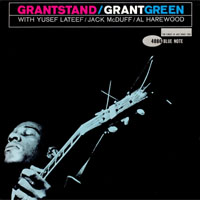
GRANTSTAND (1962)
4 tracks, 38 minutes

For this recording session, Green added a horn player to the organ trio with mixed results. I'm not referring to the playing, which is great, but at times the sound gets a little muddled with the addition. But overall, a fine representation of Green's soulful, blues-inflected guitar style from the early '60s.

Original 1962 liner notes written by Nat Hentoff.

Green - guitar
Yusef Lateef - tenor saxophone, flute
Brother Jack McDuff - organ
Al Harewood - drums

Reviews/ratings:
  • The Virgin Encyclopedia of Jazz (1999): ★★★★
  • The Penguin Guide to Jazz (9th ed., 2008): ★★★
  • The Rolling Stone Jazz & Blues Album Guide (1999): ★★★★


Peak on the US Billboard Top 200 chart: Did not chart

Tracks: Of the four tracks, two were written by Green. Both of those, the title cut and the multifaceted Blues in Maude's Flat, are quite good. I've never cared much for My Funny Valentine and even the fine performance here can't change my mind about it. Things wrap up with a brief, horn-free, tasteful take on Old Folks.


GRANT'S FIRST STAND (1961)
6 tracks, 41 minutes

As the title implies, this is Green's debut album as a leader. Green's clean tone is the highlight of this organ trio soul-jazz outing.

Original 1961 liner notes written by Robert Levin, writer of liner notes for over 100 Blue Note albums.

Green - guitar
Roosevelt "Baby Face" Willette - organ
Ben Dixon - drums

Reviews/ratings:
  • DownBeat (★★★): "Green apparently has a good deal of potential"
  • The Virgin Encyclopedia of Jazz (1999): ★★★
  • The Penguin Guide to Jazz (9th ed., 2008): ★★½

Peak on the US Billboard Top 200 chart: Did not chart

Tracks: The opening track, a Green original titled Miss Ann's Tempo, swings hard - what an introduction! And then most of the remaining tracks live up to that intro, particularly Blues For Willarene. The weakest cut is the plodding 'Tain't Nobody's Business If I Do.


REACHING OUT (1961)
6 tracks, 41 minutes

A mix of bluesy soul jazz on some tracks to straight ahead, swinging hard bop on others. Originally released as Reaching Out by The Dave Bailey Quintet on the Jazztone label in 1961 and reissued with altered sequencing under the title Green Blues by Grant Green in 1973 on the Muse label. Since he wasn't the leader on this session, there's no originals from Green on this one. And since it wasn't released on Blue Note, it has a distinctively different sound to it. Not bad, just different. The DownBeat reviewer (below) notes the out-of-tune piano used for the date; it's quite a distraction at times. It's Bailey's album and Frank Haynes takes the lead on tenor, but Green and bassist Ben Tucker steal the show.

Original 1961 liner notes written by Bailey and 1973 reissue liner notes by Mark Gardner.

Green - guitar
Frank Haynes - tenor saxophone
Billy Gardner - piano
Ben Tucker - bass
Dave Bailey - drums

Reviews/ratings:
  • DownBeat (★★★½): "This collection has several things to recommend it, not the least of which is the work of Green"

Peak on the US Billboard Top 200 chart: Did not chart

Tracks: Of the six tracks on this album, today I'm digging the title cut, One For Elena, and Falling In Love With Love.


Previously revisited for the blog:
Talkin' About (1965)
Green Street (1961)


Saturday, April 6, 2024

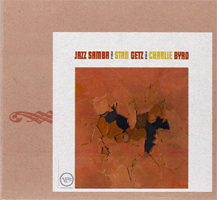
Stan Getz & Charlie Byrd - Jazz Samba (1962)


Note: the CD I listened to was the 1997 Verve Master Edition.

I wasn't around in 1962, but from what I read, it appears this thing was unexpectedly huge. Guitarist/arranger Charlie Byrd had fallen in love with the bossa nova sounds coming out of Brazil in the late '50s, most notably Chega de Saudade by João Gilberto and Antônio Carlos Jobim's soundtrack to the 1959 film Black Orpheus. Byrd brought in Stan Getz to record these songs on Tuesday, February 13, 1962 in Pierce Hall at the All Souls Unitarian Church in Washington, D.C. Two hours later, the album was finished and the bossa nova craze would hit the U.S. The term 'bossa nova' was simply created to described the merging of the traditional Brazilian samba with jazz music. So, the title Jazz Samba is synonymous with term bossa nova. Not bad for a day's work. This album became the only jazz album to ever hit #1 on the Billboard 200 and Getz would then record four more bossa albums in 13 months, including Getz/Gilberto.

The instrumentation includes two percussionists and, on some tracks, two bass players, both taken from the Brazilian samba tradition. The lead track and lead single, Desafinado, won the Grammy Award for Best Jazz Performance and was nominated for the Grammy Award for Record of the Year, eventually losing to Tony Bennett's I Left My Heart In San Francisco. The album itself was nominated for Album of the Year, bowing to the comedy album The First Family. In 2010, the album was inducted into the Grammy Hall of Fame. Not a bad place to start a journey into bossa nova (but I'd say the same about Getz/Gilberto). As for my journey, I've just checked out the following book from the local library: Bossa Nova: The Story of the Brazilian Music That Seduced the World by Ruy Castro.

Speaking of books...for its inclusion in the 2005 book 1001 Albums You Must Hear Before You Die, Andrew Gilbert wrote, "the album is a perfect melding of swing and samba, with Getz's velvet tenor flowing semlessly from one track to another."

Original liner notes by Dom Cerulli.

Reviews/ratings:
  • Downbeat (★★★★½ ): "beautifully turned little gems played by a pair of brilliant jazz musicians who seem very much in rapport."
  • Stereo Review: "a surprisingly varied listening experience."
  • High Fidelity: "The playing is unpretentious and thoroughly delightful."
  • Billboard: "Another beautiful set"
  • CashBox: "The wax marriage of these two jazz names, should in itself bring out a host of fans."
  • The Rolling Stone Jazz & Blues Album Guide (1999): ★★★★
  • The Virgin Encyclopedia of Jazz (1999): ★★★★★
  • The Penguin Guide to Jazz (5th ed., 2000): ★★★½


Album chart peaks:
  • US Billboard 200: #1
  • CashBox (Stereo): #1

Tracks: The two singles from this album, Desafinado (#15 pop, #4 easy listening) and Samba de Uma Nota Só (did not chart) were written by Jobim. While I prefer the latter to the former, all the the tracks are great and with a running time of under 35 minutes, there's no reason to play the whole thing through (maybe twice).

Personal Memory Associated with this CD: None.

Previously revisited for the blog:
Verve Jazz Masters 53: Bossa Nova (1996)
Getz/Gilberto (1964)

Thursday, February 29, 2024

Paul Desmond - Desmond Blue (1962)


Japanese import

"This album is a listening experience unlike any you have ever enjoyed. And enjoy it you will - it is rich, subtle, varied, exquisitely tasteful, and masterfully performed"
-from the album's original liner notes

Two out of five ain't bad? The album is indeed subtle plus Desmond and guitarist Jim Hall deliver solid performances. However, bland arrangements are a dime a dozen.

Desmond is best known for his work in the Dave Brubeck Quartet and composer of their signature tune, Take Five. He also put out over a dozen albums under his own name, including this 1962 RCA release. I enjoy the music and performances, but the Bob Prince string arrangements aren't working for me. The contemporary review in DownBeat magazine put it this way: "The strange suicidal urge that drives jazz musicians relentlessly toward sessions with strings will probably never be satisfactorily explained." It's not terrible or unpleasant by any means; it would simply have been a more interesting album with a combo setting.

Reviews/ratings:
  • Stereo Review: "Desmond is excellent in his Victor debut, but the backgrounds too often caress when they should challenge."
  • High Fidelity: "seems relatively uninspired"
  • Billboard: "shows Desmond off at his lyric best against a sweeping string background."
  • CashBox: "LP is composed of mostly sturdies and Desmond offers proof of genius of lyric improvisation."
  • DownBeat: ★★★
  • The Virgin Encyclopedia of Jazz (1999): ★★★★
  • The Penguin Guide to Jazz (5th ed., 2000): ★★★


Peak on the US Billboard Top 200 chart: Did not chart

Tracks: The best track is the take on the 1936 Cole Porter standard, I've Got You Under My Skin. My least favorite track is My Funny Valentine, in which Desmond duets with an unnamed oboe player.

Personal Memory Associated with this CD: I purchased this CD - along with Matchbook - after absentmindedly looking online for random lists of top/best/favorite jazz albums. I was searching for something beyond the usual answers (Kind Of Blue, Somethin' Else, Idle Moments, Blue Train, etc.). Side note: there sure are a lot of jazz albums with the word "blue" in the title, aren't there?


Sunday, November 5, 2023

Dexter Gordon - Go! (1962)

Go album cover

"Love, warmth and sheer joy are all present in Gordon's sound and attack." - from the original album liner notes by Ira Gitler.

Recorded at Rudy Van Gelder's studio in Englewood Cliffs studio on Monday, August 27, 1962, this album is swinging, classic hard bop from one of the masters of the genre. The band is tight and supportive. My only complaint would be that Billy Higgins is a bit overactive on his kit at times, but I love how Sonny Clark is as good an accompanist as he is soloist - totally tuned in to what everybody is doing at all times. And then there's Gordon's solid blowing over it all. Dig!

Gordon - tenor saxophone
Sonny Clark - piano
Butch Warren - bass
Billy Higgins - drums

I was able to resist the temptation to use a popular board game reference, but the liner notes could not:
Meanwhile, proceed directly to Go! You won't collect $200.00, but you will get a monopoly of Melody Avenue, Swing Street and Inspiration Place.

Reviews/ratings:
  • CashBox: "displays a fine sensitive brand of wailing"
  • Stereo Review: Recording of Special Merit
  • DownBeat (★★★★★): "There are few LPs one can get high on simply by listening; this is one of them."
  • The Rolling Stone Jazz & Blues Album Guide (1999): ★★★★½
  • The Virgin Encyclopedia of Jazz (1999): ★★★★
  • The Penguin Guide to Jazz (5th ed., 2000): ★★★

Critics seem split as to whether Go! is Gordon's best or the later Our Man In Paris (1963). Nevertheless, Go! was selected by Blue Note (Europe) in 1987 as one of the 25 Best Albums ever issued on the label.


In 2018, Go! was selected by the Library of Congress for preservation in the National Recording Registry for being "culturally, historically, or aesthetically significant."

Update: In 2024, uDiscover Music ranked this album at #9 on its list of The 50 Greatest Blue Note Albums.


Peak on the US Billboard Top 200 chart: Did not chart

Tracks: All six are great, but of all the tracks, my top picks are Cheese Cake, Love For Sale, and the beautiful ballad I Guess I'll Hang My Tears Out To Dry.

Personal Memory Associated with this CD: None

Previously revisited for the blog:
Round Midnight - Original Motion Picture Soundtrack (1986)
American Classic (1982)

Thursday, October 12, 2023

Various Artists - Billboard Top Rock'n'Roll Hits 1962 (1993)


Not sure about rock'n'roll hits, but there are some fun pop hits along with a healthy helping of R&B. This CD (compiled by Joel Whitburn and released by Rhino) is first-rate; my only complaint is the 24 minute running time.

This disc is part of a 20 CD compilation series spanning 1955 to 1974, with one 10-track album for year; each track made the Top 10 of the Billboard Hot 100. All the Billboard Top Rock'n'Roll Hits discs for years 1960 through 1969 were originally released in 1988 or 1989, and rereleased in 1993 with revised track listings, due to licensing restrictions. This 1993 reissue replaces Big Girls Don't Cry by The Four Seasons with Green Onions.

Peak on the US Billboard Top 200 chart: Did not chart

Tracks, including Billboard Hot 100 chart peak:

Title Artist
Pop
Green Onions Booker T. & The MG's 3
Duke Of Earl Gene Chandler 1
Soldier Boy The Shirelles 1
Sheila Tommy Roe 1
Peppermint Twist, Pt. 1 Joey Dee & The Starlighters 1
The Loco-motion Little Eva 1
The Wanderer Dion 2
Breaking Up Is Hard To Do Neil Sedaka 1
Johnny Angel Shelley Fabares 1
Palisades Park Freddy Cannon 3

8 out of the 10 tracks are new to my CD shelves but not new to my ears. Since I was born in 1966, these tunes have always been around. Of the ten, my favorite cuts are Green Onions, Duke Of Earl, Breaking Up Is Hard To Do, and Johnny Angel.

Personal Memory Associated with this CD: I'm getting flashbacks of singing Duke Of Earl with friends around 1977. If memory serves, we sang it at a tempo far faster than the Chandler version. 

Previously revisited for the blog:
Billboard Top Rock'n'Roll Hits 1968

Monday, June 12, 2023

Hank Mobley - Workout (1962)


Appropriately titled as Mobley and the band are gettin' after it here. And, as mentioned in the Stereo Review (below), the band often steals the show, particularly Wynton Kelly and Grant Green. Except for Green, this band was also gigging with Miles Davis around the same time and recorded such albums as Someday My Prince Will Come (1961) with Miles.

Original liner notes by Leonard Feather.

Mobley - tenor saxophone
Grant Green - guitar
Wynton Kelly - piano
Paul Chambers - bass
Philly Joe Jones - drums

Reviews/ratings:
  • Stereo Review: "Mobley is much less interesting than his supporting cast"
  • Billboard (★★★★): "bright, swinging work here"
  • The Rolling Stone Jazz & Blues Album Guide (1999): ★★★½
  • The Virgin Encyclopedia of Jazz (1999): ★★★★
  • The Penguin Guide to Jazz (5th ed., 2000): ★★★½

In 1987, this album was selected by Blue Note (Europe) as one of the 25 Best Albums on the label.


Peak on the US Billboard Top 200 chart: Did not chart

Tracks: Four Mobley originals plus a standard cover. While the originals aren't anything particularly memorable, they certainly get the job done with fast tempi and blazing solos, particularly the title track. Things slow down slightly at the end with of The Best Things In Life Are Free (from the 1927 musical, Good News) and the album closer, Greasin' Easy. My favorite cut here is the swinging, bluesy Uh Huh.

This 2006 Rudy Van Gelder edition of the CD contains a bonus track, a rather pedestrian take on the Academy Award-winning standard Three Coins In A Fountain. 

All tracks recorded at the same session on Sunday, March 26, 1961. Later in 1961, the same band (minus Green) recorded a follow-up album, titled Another Workout. However, that album wasn't released until 1985 - pressuring artists into making albums then not releasing them was sometimes a problem at Blue Note.

Personal Memory Associated with this CD: None - picked this up within the past few years as my fascination with '60s hard bop took more of my time and money.

Previously revisited for the blog:
Roll Call (1961)

Thursday, December 29, 2022

Lou Donaldson - Blues Walk (1958)/Gravy Train (1962)/Lou Takes Off (1958)/Here 'Tis (1961)


UK Import

2017 compilation of four albums by saxophonist "Sweet Poppa Lou" Donaldson. All 4 albums recorded by Rudy Van Gelder for the Blue Note label in the late '50s/early '60s. I was previously unfamiliar with the British Avid label, but it appears they (quite understandably) took full advantage of the length of copyright laws in Europe (50 years). However, this package isn't a shoddy production. Albums have been remastered and the original liner notes are included. When I grab this set, I normally pick just one of the two CDs to spin. The disc I choose varies, but at 75+ minutes per disc, the length is usually perfect for me.

In 2013, Donaldson was honored as a Jazz Master by the National Endowment for the Arts and has been inducted into the The International Jazz Hall Of Fame.

BLUES WALK (1958)
6 tracks, 34 minutes


An album during Donaldson's transition from hard bop to R&B/soul-jazz, so there's a variety of tracks to be found here, from the bebop of Move to the bluesy title track.

Original 1958 liner notes written by Ira Gitler, jazz historian and journalist.

Donaldson - alto sax
Herman Foster - piano
John "Peck" Morrison - bass
Dave Bailey - drums
Ray Barretto - congas

Reviews/ratings:
  • Billboard (★★★): "Good solid jazz here"
  • CashBox: "Sturdy jazz performances"
  • DownBeat (★★★): "In some respects, this is the most interesting Donaldson recital I have heard"
  • The Penguin Guide to Jazz (5th ed., 2000) (★★½): the material is rather dull"
  • The Rolling Stone Jazz & Blues Album Guide (1999): ★★★
  • The Virgin Encyclopedia of Jazz (1999): ★★★


Peak on the US Billboard Top 200 chart: Did not chart

Tracks: It's a great listen from top-to-bottom, but of the six offerings here, my top picks are the standards The Masquerade is Over (written 1939), and Autumn Nocturne (written 1941), plus the title track, a Donaldson original.


GRAVY TRAIN (1962)
7 tracks, 44 minutes


A more commercial effort in which Donaldson and crew cover a number of popular tunes from the '30s and '40s with varying degrees of success. An enjoyable album, nevertheless.

Original 1962 liner notes written by Joe Goldberg, noted jazz author.

Donaldson - alto sax
Herman Foster - piano
Ben Tucker - bass
Dave Bailey - drums
Alec Dorsey - congas

Reviews/ratings:
  • Billboard: "swings away with carefree abandon"
  • CashBox: "Donaldson has developed a free-flowing style in the modern mainstream that is all his own"
  • The Virgin Encyclopedia of Jazz (1999): ★★★
  • The Penguin Guide to Jazz (9th ed., 2008): ★★★


Peak on the US Billboard Top 200 chart: Did not chart

Tracks: The more successful cuts here are the ballad Polka Dots And Moonbeams and the two groovin' originals, Twist Time and the title track. Less successful are South Of The Border and Avalon.


LOU TAKES OFF (1958)
4 tracks, 39 minutes


This album records Donaldson in his hard bop days, heavily influenced by Charlie Parker. Notable for the inclusion of two extra horn players, Donald Byrd and Curtis Fuller. An aptly titled album, this music swings and it swings hard.

Original 1958 liner notes written by Robert Levin, writer of liner notes for over 100 Blue Note albums.

Donaldson - alto sax
Donald Byrd - trumpet
Curtis Fuller - trombone
Sonny Clark - piano
George Joyner - bass
Art Taylor - drums

Reviews/ratings:
  • High Fidelity: "Some furious and, considering the tempos, surprisingly coherent playing by a group that shows moments of hotheaded genius"
  • DownBeat (★★★★): "A very good blowing set by the Young Turks of New York"
  • Billboard (★★): "a hard-driving set"
  • The Virgin Encyclopedia of Jazz (1999): ★★★


Peak on the US Billboard Top 200 chart: Did not chart

Tracks: Four cuts here, including two originals by Donaldson: the breakneck opener, Sputnik, plus the bluesy Strollin' In. Also covers of bop tunes by Charlie Parker (Dewey Square) and Dizzy Gillespie (Groovin' High). The best bets are Dewey Square and Strollin' In.


HERE 'TIS (1961)
5 tracks, 39 minutes


Maybe my favorite of the four albums in this set, probably because of the use of drawbar organ and the wonderful playing of Grant Green - a great choice of instrumentation and it pays off. The ad below claims this is "a Groovy Album" and I am here to confirm that assertion.

Original 1961 liner notes written by Levin.

Donaldson - alto sax
Roosevelt "Baby Face" Willette - organ
Grant Green - guitar
Dave Bailey - drums

Reviews/ratings:
  • Stereo Review: "jazz of a spontaneous but fairly routine level"
  • CashBox: "the group shows itself to be a superior blending of musical talents"
  • The Virgin Encyclopedia of Jazz (1999): ★★★★


Peak on the US Billboard Top 200 chart: Did not chart

Tracks: Five swingin' soul-jazz cuts including three Donaldson originals. We're treated to a cover of the Gershwins' A Foggy Day plus four 12-bar blues tunes. All recommended.


Tuesday, December 20, 2016

Ray Conniff and The Ray Conniff Singers - The Complete Columbia Christmas Recordings (2016)


If you're like me, then around this time of year you try to recapture a taste of Christmastimes past. That desire led to the purchase of this two disc compilation of Ray Conniff Christmas albums from Real Gone Music.


The following three albums were originally released in 1959, 1962, and 1965, respectively. I wasn't around during those years and I don't know if I actually heard a lot of these arrangements in my early years, but in my mind I did. The latter album adopts a more folky sound to adapt to the times and even includes a trombone solo from Conniff himself.


As a teenager, I was surprised to learn The Ray Conniff Singers made albums that weren't Christmas music (still don't think I've heard them, though).

Peaks on the US Billboard Top 200 chart:
  • Christmas With Conniff: #14 in 1959
  • We Wish You a Merry Christmas: #32 in 1962
  • Here We Come A-Caroling: #15 on the Christmas Album Chart in early 1966.

Tracks: Conniff had a formula and stuck to it. That formula made him a lot of money, but the recipe goes stale over the course of these 31 tracks. All tracks are highly recommended for Christmas music shuffles/playlists/mix tapes, but 90+ minutes straight? A bit much for this guy.

Overall, disc 1 is preferable to disc 2. If you like cheese on your Christmas dinner table, check out the groovy Joy To The World.

Personal Memory Associated with this CD: You'd think that if I purchased CDs for nostalgia, then I'd have specific memories attached, but I gots nuthin'. But I'm reminded of this 1974 special markets album (Firestone? Goodyear?) which, ironically, doesn't include a Conniff track.


Tuesday, November 19, 2013

Booker T. & The MGs - Green Onions (1962)


Note: the CD I listened to was the 2012 50th Anniversary reissue.

I'm not much of a podcast guy, but I'll listen to one every now and then. My friend Blake hipped me to the Booker T. Jones episode of the WTF podcast with Marc Maron. If you have any interest whatsoever in Stax or soul music, try to find it. Listening to that episode this week led me to believe Booker T. Jones is the coolest musician on the planet and prompted me to pull out this classic album.

This is the debut album from the Stax house band. Bruce Eder, over at Allmusic, writes:
There's not a note or a nuance out of place anywhere on this record, which featured 35 of the most exciting minutes of instrumental music in any category that one could purchase in 1962 (and it's no slouch multiple decades out, either).
I can't really add anything to that except that I think it's an amazing accomplishment considering Jones, the band's leader, was 17 years old when this was recorded.

Peak on the US Billboard Top 200 chart: #33

Tracks: The title track is a classic but there are some really fantastic cover tunes here as well, including I Got A Woman, Twist And Shout, Lonely Avenue, and Comin' Home Baby. Having hastily recorded covers as album filler was commonplace in those days, so quality covers like these are relatively rare phenomena. Don't you dare skip any tracks. Even the two bonus tracks (recorded live in '65) are top notch, especially the live version of Green Onions.


Personal Memory Associated with this CD: The last time I visited The Stax Museum of American Soul Music, I went as it opened on a cold, rainy Sunday morning in December. I think it was 2011. I was by myself, but 4 others were there. As we wound our way through the museum, I took my time at most every exhibit, while the others moved quickly. So by the time I made my way to the reproduction of the famous movie theater space that served as the Stax studio, I was completely alone. On the floor of the studio sits the Hammond M-3 organ used on this recording. I must have spent 10 minutes alone in that studio just staring at the organ, thinking of all the soul classics on which it appears. Just me and the organ. I've been to that museum several times, but those minutes make up my favorite time there.


Previously revisited for the blog:
Potato Hole (2009)
McLemore Avenue (1970)


Friday, May 4, 2012

John Coltrane - Coltrane Plays The Blues (1962)


I realize the cool and hip Coltrane album to praise is A Love Supreme, but since I'm neither cool nor hip, I think I'll go out on a limb and claim this gem as my favorite Coltrane release. Recorded in its entirety on October 24, 1960, this album presents songs that don't always have a traditional blues structure (some are more modal than blues), but they all have a definite bluesy feel to them. And it all swings, thanks to the a great rhythm section including drummer Elvin Jones (yes, you read that right. I just complimented a drummer). These were recorded for Atlantic during the same sessions as My Favorite Things, but weren't released until two years later, when Coltrane had moved on to the Impulse! label. Since these cuts were already in the Atlantic vault, they released them without either Coltrane's input or approval. I don't know if Coltrane was upset at this, but I'm certainly not.

Coltrane - soprano and tenor saxophone
McCoy Tyner - piano
Steve Davis - bass
Elvin Jones - drums

Reviews/ratings:
  • Billboard: "One of Coltrane's most provocative albums to date"
  • Stereo Review: "particularly absorbing"
  • DownBeat: ★★★½
  • The Rolling Stone Jazz & Blues Album Guide (1999): ★★★★
  • The Virgin Encyclopedia of Jazz (1999): ★★★★
  • The Penguin Guide to Jazz (5th ed., 2000): ★★★★


Tracks:  I'll gladly listen to them all without complaint.

Personal Memory Associated with this CD:  This CD has received steady play over the last 10-15 years, but was on very heavy rotation about 3 years ago, when I went through a heavy blues phase.

Tuesday, October 11, 2011

Miles Davis at Carnegie Hall (1962)


1991 Japanese Import (mono)

Miles didn't want this recorded, but Teo Maceo recorded it anyway, just for a historical artifact. After the show, Miles decided to release it anyway, so what we're stuck with is essentially a soundboard recording. So the sound isn't as good as it could have been, but Miles and the band bring it anyway. It's an interesting idea (but wasn't that always Miles' trademark) to bring his acoustic group and add some tasty support by Gil Evans and his orchestra. Coltrane had left Miles by then, and while no one could possibly replace him, Hank Mobley does a great job and adds his own voice without trying to imitate Trane. This May 19, 1961 concert was one of only two shows Davis and Evans performed together. Great stuff. I'd listen to this more often if the sound were better, but once I get past that, it's all good.

The original album liner notes feature reviews of the May 19, 1961 concert as printed in the New York Times, the New York Herald Tribune, and DownBeat magazine.

Davis - trumpet
Hank Mobley - tenor saxophone
Wynton Kelly - piano
Paul Chambers - bass
Jimmy Cobb - drums
with Gil Evans and his 21-piece orchestra

Reviews/ratings:
  • Billboard: "some of the best Miles Davis around"
  • High Fidelity: "this is a compelling disc"
  • Stereo Review: "The release is an important addition to the Davis discography."
  • DownBeat: ★★★★
  • The Penguin Guide to Jazz (5th ed., 2000): ★★★½
  • The Rolling Stone Jazz & Blues Album Guide (1999): ★★★★
  • The Virgin Encyclopedia of Jazz (1999): ★★★★

Peak on the US Billboard Top 200 chart: #59

Tracks: For me, the highlights are an uptempo So What and a swinging No Blues. Unfortunately, Someday My Prince Will Come is way too short because Miles walked off during a protest against the concert's organizers by Max Roach at the foot of the stage (read Miles' autobiography for more on that).

Personal Memory Associated with this CD: Purchased in the early 2000's when I thought I had finally figured out Davis enough to appreciate him.

Previously revisited for the blog:
Panthalassa: The Remixes (1999)
This Is Jazz, Vol. 8: Miles Davis Acoustic (1996)
Live Around The World (1996)
Music from Siesta (1987)
Milestones (1958)