Since September 2010, this blog has recorded the journey of this music junkie as I attempt to listen to all the music in my CD collection. CDs revisited in their entirety from start to finish - no skipping tracks, no shuffle. Compact Discs only - no vinyl, no tapes, no files.

Showing posts with label 1961. Show all posts

Thursday, August 14, 2025

Robert Johnson - King Of The Delta Blues Singers (1961)


Recorded 1936 & 1937, album originally released 1961, this particular CD reissue released in 1998.

From the back CD insert:
By 1961, Robert Johnson had become something of a mythical figure who people had heard of but had not necessarily heard. His recordings - the most important blues recordings of all time - had become virtually lost to the ages. That was, until this album, King Of The Delta Blues Singers was compiled and released, sparking a whole new generation's interest in authentic delta blues. Now, newly remastered and expanded to include a recently discovered, previously unreleased version of "Traveling Riverside Blues," King Of The Delta Blues Singers is a monument to the blues and an essential album for any music fan.
The last part may seem like hyperbole, but I don't think it is and I'm not sure what I can add to that. This is the real deal makes up an important album. It should be required listening in order to understand not only blues music, but also the '60s British invasion groups that owe quite a bit to these recordings (Stones, Clapton, Zep, etc). The remastering here is fantastic, plus, if I'm in just the right mindset, it's a blast to listen to. 

Uncredited 1961 liner notes and 1998 reissue liner notes by Peter Guralnick. Further reading recommendation: Biography of a Phantom: A Robert Johnson Blues Odyssey by Robert "Mack" McCormick.

Album chart peaks:
  • US Billboard 200: Did not chart
  • Billboard Catalog (1987): #34

Johnson has been honored posthumously many times (for a partial list, check his Wikipedia page), but since I was a philatelist as a teen, I'm choosing his selection to appear on a US postage stamp in 1994 to be my personal favorite:

Tracks:

Personal Memory Associated with this CD: The Gunter Hotel, where Johnson allegedly recorded these songs in room 414, is about 11 miles from our house, across the street from a theater my wife and I frequent, and next door to our favorite local steakhouse. One year for my birthday, I decided my lovely wife and I would enjoy a steak and a few drinks then spend the night in room 414 just to say we had stayed there. The hotel often hosts live music at its lobby bar, appropriately named Bar 414. There is also a plaque and small display recognizing Johnson near the hotel's front entrance.
However, the current owners, the Marriott organization, do not want you spending the night in room 414. At the very least, they don't make it easy for a music fan. Despite my best efforts - multiple phone calls, multiple in-person front desk attempts, clicking all over the hotel's website - the best I could get is "We can't guarantee anything, book a reservation for the night you want for a suite, then call the day before and request room 414. If it's available for that night, we'll try to hold it for you." The charge for a suite for one night in June at the time (2022 maybe?) was $450. Needless to say, we have not spent the night in room suite 414. Screw 'em. Seems like the hotel has really missed an opportunity not properly marketing its historic past.

Previously revisited for the blog:
Escaping The Delta (2004)

Saturday, May 3, 2025

Grant Green - Four Classic Albums (2012)


UK Import

2012 compilation of four albums by guitarist Grant Green, recorded in 1961-62, just as Green was coming on the scene. Another quality compilation from the British Avid label, who take full advantage of the length of copyright laws in Europe (50 years) and, might I add, make classic jazz releases quite affordable: I paid $11.98, new, for this 2 disc set.  Albums have been remastered and the original liner notes are included. Each disc pushes 80 minutes in length and the time just seems to fly by. Highly enjoyable.


SUNDAY MORNIN' (1962)
6 tracks, 42 minutes

Don't be confused by the title, this isn't religious or gospel music (that would come later with the Feelin' The Spirit album). There is, however, a track titled Sunday Morning and my best guess would be that both are named for the fact that the album was recorded on Sunday, June 4, 1961. Laid back modal jazz with soulful, swinging grooves. Or, as the ad below notes, "all six selections in this LP contain striking evidence of Green's stature in the vanguard of the new wave of jazz guitarists."

Original 1962 liner notes written by Joe Goldberg, noted jazz author.

Green - guitar
Kenny Drew - piano
Ben Tucker - bass
Ben Dixon - drums

Reviews/ratings:
  • Billboard (★★★★): "Good solid jazz here"
  • The Penguin Guide to Jazz (5th ed., 2000): ★★½
  • The Virgin Encyclopedia of Jazz (1999): ★★★★

Peak on the US Billboard Top 200 chart: Did not chart

Tracks: Of the six tracks here, 3 are Green originals (Freedom March, the title track, Come Sunrise), a movie theme (Exodus), and two standards (God Bless The Child & So What). The only track that falls flat is Exodus.


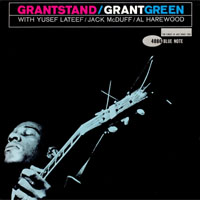
GRANTSTAND (1962)
4 tracks, 38 minutes

For this recording session, Green added a horn player to the organ trio with mixed results. I'm not referring to the playing, which is great, but at times the sound gets a little muddled with the addition. But overall, a fine representation of Green's soulful, blues-inflected guitar style from the early '60s.

Original 1962 liner notes written by Nat Hentoff.

Green - guitar
Yusef Lateef - tenor saxophone, flute
Brother Jack McDuff - organ
Al Harewood - drums

Reviews/ratings:
  • The Virgin Encyclopedia of Jazz (1999): ★★★★
  • The Penguin Guide to Jazz (9th ed., 2008): ★★★
  • The Rolling Stone Jazz & Blues Album Guide (1999): ★★★★


Peak on the US Billboard Top 200 chart: Did not chart

Tracks: Of the four tracks, two were written by Green. Both of those, the title cut and the multifaceted Blues in Maude's Flat, are quite good. I've never cared much for My Funny Valentine and even the fine performance here can't change my mind about it. Things wrap up with a brief, horn-free, tasteful take on Old Folks.


GRANT'S FIRST STAND (1961)
6 tracks, 41 minutes

As the title implies, this is Green's debut album as a leader. Green's clean tone is the highlight of this organ trio soul-jazz outing.

Original 1961 liner notes written by Robert Levin, writer of liner notes for over 100 Blue Note albums.

Green - guitar
Roosevelt "Baby Face" Willette - organ
Ben Dixon - drums

Reviews/ratings:
  • DownBeat (★★★): "Green apparently has a good deal of potential"
  • The Virgin Encyclopedia of Jazz (1999): ★★★
  • The Penguin Guide to Jazz (9th ed., 2008): ★★½

Peak on the US Billboard Top 200 chart: Did not chart

Tracks: The opening track, a Green original titled Miss Ann's Tempo, swings hard - what an introduction! And then most of the remaining tracks live up to that intro, particularly Blues For Willarene. The weakest cut is the plodding 'Tain't Nobody's Business If I Do.


REACHING OUT (1961)
6 tracks, 41 minutes

A mix of bluesy soul jazz on some tracks to straight ahead, swinging hard bop on others. Originally released as Reaching Out by The Dave Bailey Quintet on the Jazztone label in 1961 and reissued with altered sequencing under the title Green Blues by Grant Green in 1973 on the Muse label. Since he wasn't the leader on this session, there's no originals from Green on this one. And since it wasn't released on Blue Note, it has a distinctively different sound to it. Not bad, just different. The DownBeat reviewer (below) notes the out-of-tune piano used for the date; it's quite a distraction at times. It's Bailey's album and Frank Haynes takes the lead on tenor, but Green and bassist Ben Tucker steal the show.

Original 1961 liner notes written by Bailey and 1973 reissue liner notes by Mark Gardner.

Green - guitar
Frank Haynes - tenor saxophone
Billy Gardner - piano
Ben Tucker - bass
Dave Bailey - drums

Reviews/ratings:
  • DownBeat (★★★½): "This collection has several things to recommend it, not the least of which is the work of Green"

Peak on the US Billboard Top 200 chart: Did not chart

Tracks: Of the six tracks on this album, today I'm digging the title cut, One For Elena, and Falling In Love With Love.


Previously revisited for the blog:
Talkin' About (1965)
Green Street (1961)


Wednesday, April 3, 2024

Jimmy Smith - Home Cookin' (1961)


Note: the CD I listened to was the 2003 Rudy Van Gelder Edition with 5 bonus tracks.

The advertisement below lists this album as "an 'all blues' date" and that's the best way describe it: blues and/or bluesy bordering on soulful R&B. And lots of it. It always amazes me to hear Smith play the bass lines with his feet (just listen to Sugar Hill or Gracie, for example, literally some walking bass lines!). The other outstanding performance here comes from guitarist Kenny Burrell - nothing but quality solos throughout. Pair with any of Smith's other early '60s Blue Note releases such as Midnight Special and Back At The Chicken Shack (1963)

The tracks were compiled from three recording dates:
  • Tuesday, July 15, 1958
  • Sunday, May 24, 1959
  • Tuesday, June 16, 1959
All in the infamous Van Gelder Studio in Englewood Cliffs, New Jersey.

Original album liner notes by Ira Gitler.

Smith - organ
Percy France - tenor saxophone
Kenny Burrell - guitar
Donald Bailey - drums

Reviews/ratings:
  • Stereo Review: "his most listenable album to date"
  • CashBox: "One of the most evocative of jazz organs."
  • Downbeat (★★★★): "one must admit that the album is a cooker (no pun intended) from start to finish."
  • The Penguin Guide to Jazz (5th ed., 2000): ★★★
  • The Rolling Stone Jazz & Blues Album Guide (1999): ★★★½
  • The Virgin Encyclopedia of Jazz (1999): ★★★★


Peak on the US Billboard Top 200 chart: Did not chart

Tracks: My top tracks are Sugar Hill, a cover of the Ray Charles hit I Got A Woman, Messin' Around, and Come On Baby (which contains Smith's best solo on the disc).

Bonus tracks: An alternate take of Motorin' Around, plus four cuts that didn't appear on the original 1961 release: Apostrophe, Groanin' and two takes of Since I Fell For You. All fit perfectly in this bluesfest. Apostrophe is particularly a great listen because it sounds like the musicians are having a blast.

Personal Memory Associated with this CD: None

Previously revisited for the blog:
The Best of Jimmy Smith (1988)Midnight Special (1961)
Keep On Comin' (1983)Houseparty (1958)
Back At The Chicken Shack (1963)The Sermon! (1958)

Monday, June 26, 2023

Jimmy Smith - Midnight Special (1961)


Fantastic, bluesy, soulful cuts from The Incredible Jimmy Smith and a top-flight band. The album was recorded at the same 1960 session that produced Back at the Chicken Shack on Monday, April 25, 1960. Highly enjoyable - definitely one of Smith's better releases.

Original liner notes by Del Shields

Smith - organ
Kenny Burrell - guitar
Stanley Turrentine - tenor saxophone
Donald Bailey - drums

Reviews/ratings:
  • CashBox: "proof positive of Smith's stature as a significant jazz artist."
  • DownBeat (★★★): "a relaxed, informal studio session that makes few demands on the listener."
  • The Rolling Stone Jazz & Blues Album Guide (1999): ★★★
  • The Virgin Encyclopedia of Jazz (1999): ★★★★
  • The Penguin Guide to Jazz (5th ed., 2000): ★★½

Midnight Special, Part 1 peaked at #69 pop, #13 R&B in 1962

Peak on the US Billboard Top 200 chart: #28

Tracks: You can't go wrong with any of the five here. Makes a great pairing with the aforementioned Chicken Shack album, for obvious reasons.

Personal Memory Associated with this CD: None.

Previously revisited for the blog:
The Best of Jimmy Smith: The Blue Note Years (1988)
Keep On Comin' (1983)
Back At The Chicken Shack (1963)
Houseparty (1958)
The Sermon! (1958)

Thursday, December 29, 2022

Lou Donaldson - Blues Walk (1958)/Gravy Train (1962)/Lou Takes Off (1958)/Here 'Tis (1961)


UK Import

2017 compilation of four albums by saxophonist "Sweet Poppa Lou" Donaldson. All 4 albums recorded by Rudy Van Gelder for the Blue Note label in the late '50s/early '60s. I was previously unfamiliar with the British Avid label, but it appears they (quite understandably) took full advantage of the length of copyright laws in Europe (50 years). However, this package isn't a shoddy production. Albums have been remastered and the original liner notes are included. When I grab this set, I normally pick just one of the two CDs to spin. The disc I choose varies, but at 75+ minutes per disc, the length is usually perfect for me.

In 2013, Donaldson was honored as a Jazz Master by the National Endowment for the Arts and has been inducted into the The International Jazz Hall Of Fame.

BLUES WALK (1958)
6 tracks, 34 minutes


An album during Donaldson's transition from hard bop to R&B/soul-jazz, so there's a variety of tracks to be found here, from the bebop of Move to the bluesy title track.

Original 1958 liner notes written by Ira Gitler, jazz historian and journalist.

Donaldson - alto sax
Herman Foster - piano
John "Peck" Morrison - bass
Dave Bailey - drums
Ray Barretto - congas

Reviews/ratings:
  • Billboard (★★★): "Good solid jazz here"
  • CashBox: "Sturdy jazz performances"
  • DownBeat (★★★): "In some respects, this is the most interesting Donaldson recital I have heard"
  • The Penguin Guide to Jazz (5th ed., 2000) (★★½): the material is rather dull"
  • The Rolling Stone Jazz & Blues Album Guide (1999): ★★★
  • The Virgin Encyclopedia of Jazz (1999): ★★★


Peak on the US Billboard Top 200 chart: Did not chart

Tracks: It's a great listen from top-to-bottom, but of the six offerings here, my top picks are the standards The Masquerade is Over (written 1939), and Autumn Nocturne (written 1941), plus the title track, a Donaldson original.


GRAVY TRAIN (1962)
7 tracks, 44 minutes


A more commercial effort in which Donaldson and crew cover a number of popular tunes from the '30s and '40s with varying degrees of success. An enjoyable album, nevertheless.

Original 1962 liner notes written by Joe Goldberg, noted jazz author.

Donaldson - alto sax
Herman Foster - piano
Ben Tucker - bass
Dave Bailey - drums
Alec Dorsey - congas

Reviews/ratings:
  • Billboard: "swings away with carefree abandon"
  • CashBox: "Donaldson has developed a free-flowing style in the modern mainstream that is all his own"
  • The Virgin Encyclopedia of Jazz (1999): ★★★
  • The Penguin Guide to Jazz (9th ed., 2008): ★★★


Peak on the US Billboard Top 200 chart: Did not chart

Tracks: The more successful cuts here are the ballad Polka Dots And Moonbeams and the two groovin' originals, Twist Time and the title track. Less successful are South Of The Border and Avalon.


LOU TAKES OFF (1958)
4 tracks, 39 minutes


This album records Donaldson in his hard bop days, heavily influenced by Charlie Parker. Notable for the inclusion of two extra horn players, Donald Byrd and Curtis Fuller. An aptly titled album, this music swings and it swings hard.

Original 1958 liner notes written by Robert Levin, writer of liner notes for over 100 Blue Note albums.

Donaldson - alto sax
Donald Byrd - trumpet
Curtis Fuller - trombone
Sonny Clark - piano
George Joyner - bass
Art Taylor - drums

Reviews/ratings:
  • High Fidelity: "Some furious and, considering the tempos, surprisingly coherent playing by a group that shows moments of hotheaded genius"
  • DownBeat (★★★★): "A very good blowing set by the Young Turks of New York"
  • Billboard (★★): "a hard-driving set"
  • The Virgin Encyclopedia of Jazz (1999): ★★★


Peak on the US Billboard Top 200 chart: Did not chart

Tracks: Four cuts here, including two originals by Donaldson: the breakneck opener, Sputnik, plus the bluesy Strollin' In. Also covers of bop tunes by Charlie Parker (Dewey Square) and Dizzy Gillespie (Groovin' High). The best bets are Dewey Square and Strollin' In.


HERE 'TIS (1961)
5 tracks, 39 minutes


Maybe my favorite of the four albums in this set, probably because of the use of drawbar organ and the wonderful playing of Grant Green - a great choice of instrumentation and it pays off. The ad below claims this is "a Groovy Album" and I am here to confirm that assertion.

Original 1961 liner notes written by Levin.

Donaldson - alto sax
Roosevelt "Baby Face" Willette - organ
Grant Green - guitar
Dave Bailey - drums

Reviews/ratings:
  • Stereo Review: "jazz of a spontaneous but fairly routine level"
  • CashBox: "the group shows itself to be a superior blending of musical talents"
  • The Virgin Encyclopedia of Jazz (1999): ★★★★


Peak on the US Billboard Top 200 chart: Did not chart

Tracks: Five swingin' soul-jazz cuts including three Donaldson originals. We're treated to a cover of the Gershwins' A Foggy Day plus four 12-bar blues tunes. All recommended.


Tuesday, May 3, 2022

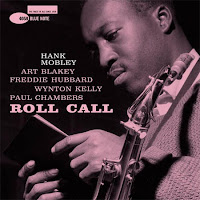
Hank Mobley - Roll Call (1961)


This album is blast to spin because it is upbeat and relentlessly swings - ballads need not apply. This definitely ain't your relax-and-unwind-after-work album.

Original liner notes by Robert Levin

Mobley - tenor saxophone
Freddie Hubbard - trumpet
Wynton Kelly - piano
Paul Chambers - bass
Art Blakey - drums

Recorded Sunday, November 13, 1960 which means this all-star crew probably had a late night gig in NYC the night before. Nevertheless, Mobley, Hubbard, and Blakey shine here while Chambers and Kelly are solid throughout. As the four star review in Billboard states: "Good wax here."

Reviews/ratings:
  • DownBeat (★★★): "Mobley...remains a limited inventor."
  • Billboard (★★★★): "a flock of exciting performances."
  • Stereo Review: "communicates more fully than most recordings the intense pleasure experienced by jazz players in a thoroughly compatible group"
  • The Rolling Stone Jazz Record Guide (1985): ★★★
  • The Virgin Encyclopedia of Jazz (1999): ★★★★

Peak on the US Billboard Top 200 chart: Did not chart

Tracks: Of the six tracks here, five are Mobley originals, all good and groovin'. Then there's a nice take on the 1945 standard, The More I See You. Also included in this 2002 Rudy Van Gelder edition is an alternate take of track 4, A Baptist Beat, which includes a bowed bass solo which isn't something you hear very often.

Sunday, February 27, 2022

Grant Green - Green Street (1961)


EU import

During the pandemic, I've been streaming/binge watching more than usual and Amazon Prime kept recommending their Bosch series, so I gave it a try. It's an okay show if you like the "veteran cop who doesn't play by the rules" genre, but I didn't like it enough to watch all seasons. However, the title character loves hard bop and his taste in music plays a supporting role in many episodes. The set designer also put together a sweet set-up for his vintage vinyl:

McIntosh and Marantz

Anyone familiar with the compulsive side of my personality can easily guess that watching the show immediately influenced my purchasing habits - I quickly bought a bunch of '60s hard bop/post bop Blue Note CDs. The Blue Note label currently seems to be focusing on its "Tone Poet" vinyl reissues, so I've conditioned myself to pick up any Blue Note CDs (especially turn of the century RVG editions) when I see them. You'll be seeing more of those in this space from time to time. And that brings us to this wonderful Grant Green album.

Recorded when he was 25, this was Green's second release as a leader. It's a trio session with Ben Tucker on bass and Dave Bailey on Drums. Of the five tracks on the album, three are originals by Green along with two standards: Alone Together and Monk's 'Round About Midnight. I enjoy Green's tone throughout and the rhythm section is tight. The CashBox review stated Green was "musically mature" and I'm in full agreement with that opinion (link to full review below). According to the liner notes, the entire album was recorded in one session on April 1, 1961 - a fairly common practice for jazz recordings. Record an album in New Jersey during the day, gig in New York City that night.

Speaking of liner notes, this edition provides us with the original 1961 liner notes by Leonard Feather as well as new 2002 notes from noted jazz critic Bob Blumenthal.

Reviews/ratings:
  • Stereo Review: "mostly unremarkable"
  • High Fidelity: "one of the most promising new jazzmen"
  • CashBox: "Musically mature beyond his years"
  • DownBeat (★★★★): "tremendous vitality and drive"
  • The Rolling Stone Jazz & Blues Album Guide (1999): ★★★½
  • The Virgin Encyclopedia of Jazz (1999): ★★★★

Update: In 2024, uDiscover Music ranked this album at #39 on its list of The 50 Greatest Blue Note Albums.

Peak on the US Billboard Top 200 chart: Did not chart

Tracks: Even though the originals are mostly modified blues, there's a nice variety and, most importantly to my ears, it always swings. All five cuts are good, but today I'm digging No. 1 Green Street and Grant's Dimensions.

Bonus tracks: Alternate takes of Green With Envy and Alone Together. While I think they picked the right takes for the original album, there's absolutely nothing wrong with these two cuts; I'm glad they were included.

Personal Memory Associated with this CD: see above

Sunday, December 6, 2020

Frank Sinatra - Sinatra's Swingin' Session!!! And More (1961)


1987 reissue of 1961 album with added tracks as part of the CD Xtra Trax Pax series:


"I think more and more that Sinatra interprets America's pop songs so memorably because he is an oversize personification of much in American life" -- Stereo Review, April, 1961

This thing swings and is a blast to listen to. Nelson Riddle's arrangements and Sinatra's phrasing are top shelf, as always. No ballads (unless you count the bonus track, Sentimental Baby), no weak soloing, one of Sinatra's more complete packages.

Rumor has it that Sinatra wanted to start his Reprise label, but Capitol was holding him to his contract. He wanted to record this album as quickly as possible, which would explain the fast tempos and short playing time but doesn't exactly explain Frank's amazing, relaxed, effortless vocals. No matter - this thing is great riding around town with top down and volume up or singing along with Frank at the top of my lungs (apologies to my neighbors).

Peak on the US Billboard Top 200 chart: #3

Tracks: 15 in 35 minutes and it's simply not enough.

Personal Memory Associated with this CD: None

Previously revisited for the blog:
Sinatra Sings Cole Porter (2003)
The Capitol Years (1990)
Sinatra at the Sands (1966)
It Might As Well Be Swing (1964)

Wednesday, November 13, 2013

Stan Kenton's West Side Story (1961)


"WEST SIDE STORY" WEEK (NOVEMBER 10-16, 2013)

The album cover reads: "from the creative world of Stan Kenton comes...Kenton's West Side Story. Driving, exciting instrumental version of Leonard Bernstein's fabulous score!" Here is one of those rare occasions when the recording actually lives up to the hype.

Nothing beats the original, but this comes close. After a very successful big band career in the '40s and '50s, pianist Stan Kenton took the bold step of adding a new instrument to the standard 18 piece big band instrumentation. From the liner notes:
The incorporation (in a 4-man section) of this unusual horn called a mellophonium - developed by the Conn Instrument Company at Stan's request - added an alto voice with a French horn-like quality to the brass section, and was intended to bridge the gap between the low-to-middle range of the trombones and the often stratospherically-directed trumpets.
This mellophonium came to be known as simply a mellophone and became popular in marching bands in the '60s-'80s as a replacement for traditional French horns (whose backward-facing bells don't readily lend themselves to marching band). Take this augmented big band (now at 22 members), add in-your-face arrangements by Johnny Richards, and you've got versions of classic show tunes that are like nothing you've heard before - part big band, part marching band. I can't begin to imagine what it must have been like to hear this group live; they seem loud on this recording no matter where I place the volume knob.

In 1962, this album won the award for Best Jazz Performance - Large Group (Instrumental) at the 4th annual Grammy Awards.

Peak on the US Billboard Top 200 chart: #16

Tracks: All 10 tracks are fantastic. My favorite arrangements are of Something's Coming, Maria, I Feel Pretty, Officer Krupke, and Somewhere.

Personal Memory Associated with this CD: As a 17 year old wannabe musician, my high school band director turned me on to this recording and I was hooked immediately. For a couple of years, my mind raced with possibilities of arranging and performing music just like this (the term 'derivative' hadn't yet entered my vocabulary). I almost had the opportunity to do some college marching band arrangements of West Side Story when I was about 21. My plan, of course, was to "borrow" some of the ideas from this album. I had all the arranging complete in my head and was ready to put pencil to paper when the band director nonchalantly told me he was getting a faculty member to do the arranging. I suspect this was his plan all along and he was just getting back at me for putting a toilet on his front yard late one night. It was all good college fun until he threw his back out trying to remove said toilet. Oops. His back eventually recovered, but our relationship obviously never did. I listened to a dubbed cassette of this album throughout college then lost touch with the work until it was released on CD in the mid-'90s.

Monday, April 9, 2012

Breakfast At Tiffany's - Music From The Motion Picture Score Composed And Conducted By Henry Mancini (1961)


Note: my copy is the 1988 remaster.

35 minutes of nuanced composing that might be better than the movie itself. Mancini is on top of his game here. Great lounge music, many tracks have a bossa/Latin feel. Still hip today, I've played this at parties with great success. A big hit when it was released, this album spent the first half of 1961 atop the Billboard album chart. At the 1962 Academy Awards, Mancini and Johnny Mercer won Oscars for Best Original Song for Moon River, while Mancini picked up a second statue for Best Original Score. Henry Mancini also won the Grammy Award for Best Soundtrack Album or Recording or Score. Recommended for cheesy fun.

Peak on the US Billboard Top 200 chart: #1 (12 weeks between Feb 10 - May 5, 1962)

Tracks: Believe it or not, I usually skip Moon River and head straight for the swinging '60s big band music. Moon River is a great song, but that folky ballad is very different from what follows. Top cuts are Something For Cat, The Big Blow Out, Latin Golightly, Loose Caboose, and Moon River Cha Cha. Named after the Mickey Rooney character, the song Mr. Yunioshi is probably the weakest of the bunch, but, then again, that whole character is offensive now. Can you imagine the outrage if a character like Yunioshi was in a movie released now?

Personal Memory Associated with this CD: Of course I'm reminded of the movie, which I've seen more times than I could count (even though I prefer Truman Capote's ending over Blake Edward's). My favorite scene is the party scene, especially the woman looking in the mirror.


Previously revisited for the blog:
Quincy Jones - Explores the Music of Henry Mancini (1968)

Sunday, September 11, 2011

On The Town - Studio Cast Recording (1961)


BROADWAY WEEK (SEPTEMBER 6-12, 2011)

Music: Leonard Bernstein
Lyrics: Betty Comden & Adolph Green


Why a "Studio Cast Recording"? When this musical about 3 sailors on 24-hour shore leave in NYC premiered in 1944, the 33⅓ LP record hadn't been invented yet (Columbia would introduce the LP format in 1948). So in 1961, this recording was released with most of the members of the original cast and an orchestra conducted by Bernstein. This particular 1998 reissue includes a recording of the musical's overture and the New York Philharmonic playing Bernstein's Three Dance Episodes from On the Town. It's no West Side Story (what is?), but it certainly isn't as bad as A Quiet Place.

The musical itself came about in an interesting way: the 1944 Jerome Robbins ballet Fancy Free, with music by Bernstein, was a hit so, naturally, producers thought the ballet could be turned into a Broadway musical. They convinced Robbins and Bernstein, who in turn wanted their friends Comden and Green to write the book and lyrics. When the director George Abbott was added to the project, funding was secured, including funding from the movie studio MGM in return for the film rights. Back then as today, it was all about the movie rights and even serious artists couldn't turn their backs on Hollywood cash. The original Broadway production ran for 462 performances. The movie version - ugh. The 1949 film starred Gene Kelly and Frank Sinatra, but the producers decided to drop all but 3 of Bernstein's songs and introduce new music by Roger Edens. I'm a big fan of liner notes and the ones included in this 16 page CD booklet do not disappoint.

Tracks: Bernstein was just entering his prime here, but my favs are New York New York, Come Up To My Place (Taxi Number), I Can Cook Too, and the instrumental Dance: Times Square. My least favorite tunes are Carried Away and I Understand. The bonus track recording of the overture is slow and bland, but the Three Dance Episodes are enjoyable despite a bad mix.

Personal Memory Associated with this CD: I saw a revival of this show in January 1999 followed by dinner at Café Un Deux Trois on 44th St. The below-average revival only ran for 69 performances, but the dinner was exquisite.